Published at Jul 28, 2026 , Updated at Aug 12, 2026
 Jakub Mrocek
 How to Survive a Bear Attack: What Actually Saved People
Since 2021 we have documented 58 bear attacks on people in Slovakia. We researched every case in depth, and for 56 of them, verbatim accounts from the people attacked and from witnesses are still available: what they saw, what they heard, what they did and what happened next. As far as we know, nobody else in Slovakia or elsewhere in Europe has a collection of firsthand accounts like this in one place.
Read those accounts side by side, and a bear attack stops being an abstract threat. It becomes a sequence of concrete seconds. Three findings emerge:
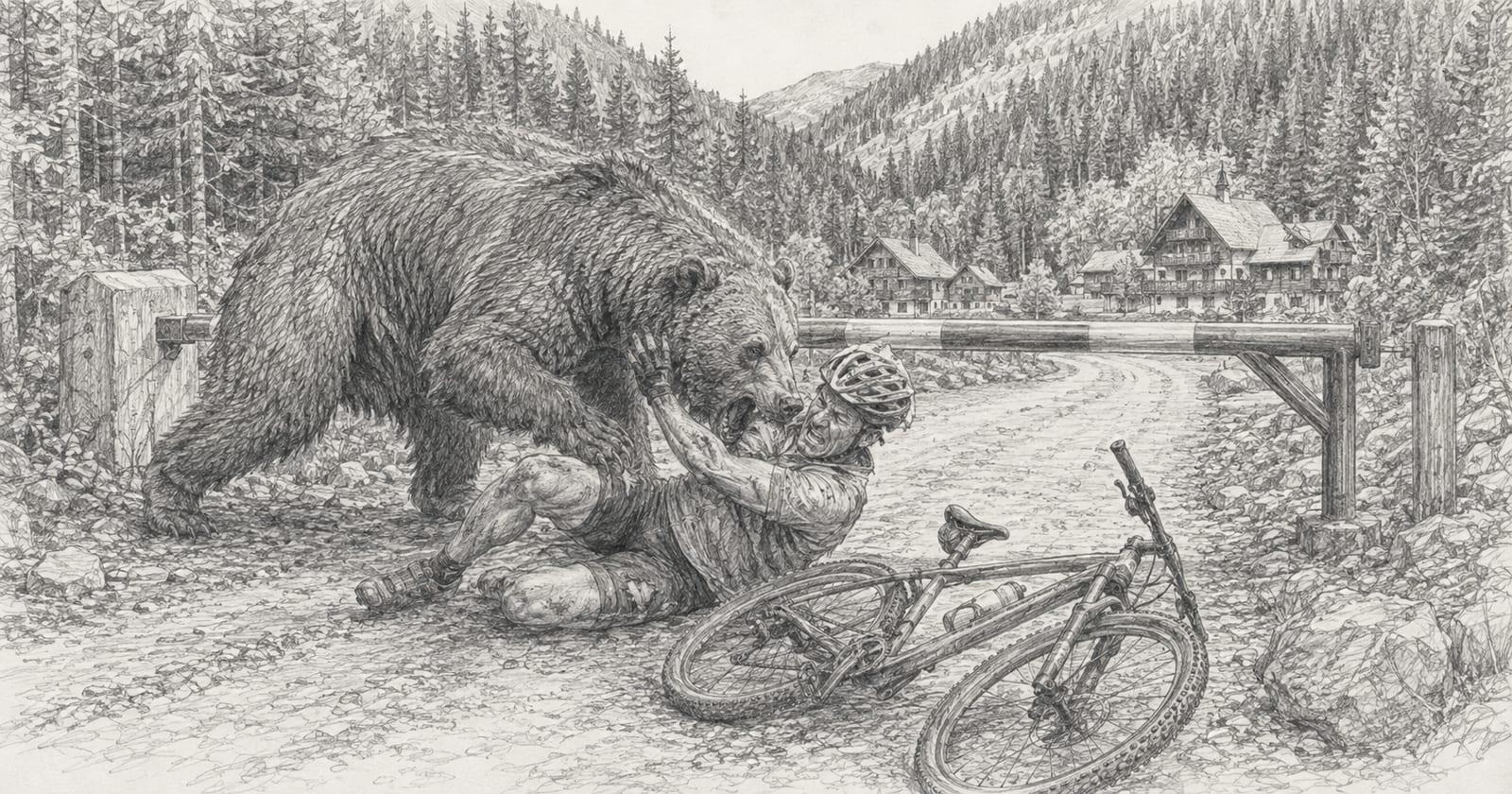
- You almost never see the bear coming. Where the distance of first sighting is documented, it is most often 0 to 5 meters.
- The attack itself lasts seconds. Repeated mauling is the exception in our record.
- In 41 of 58 cases the bear left on its own after brief contact. Nobody had to drive it away.
In practical terms, surviving a bear attack mostly means surviving its first seconds. In this article, we break down what those seconds look like and what actually helped people get through them.
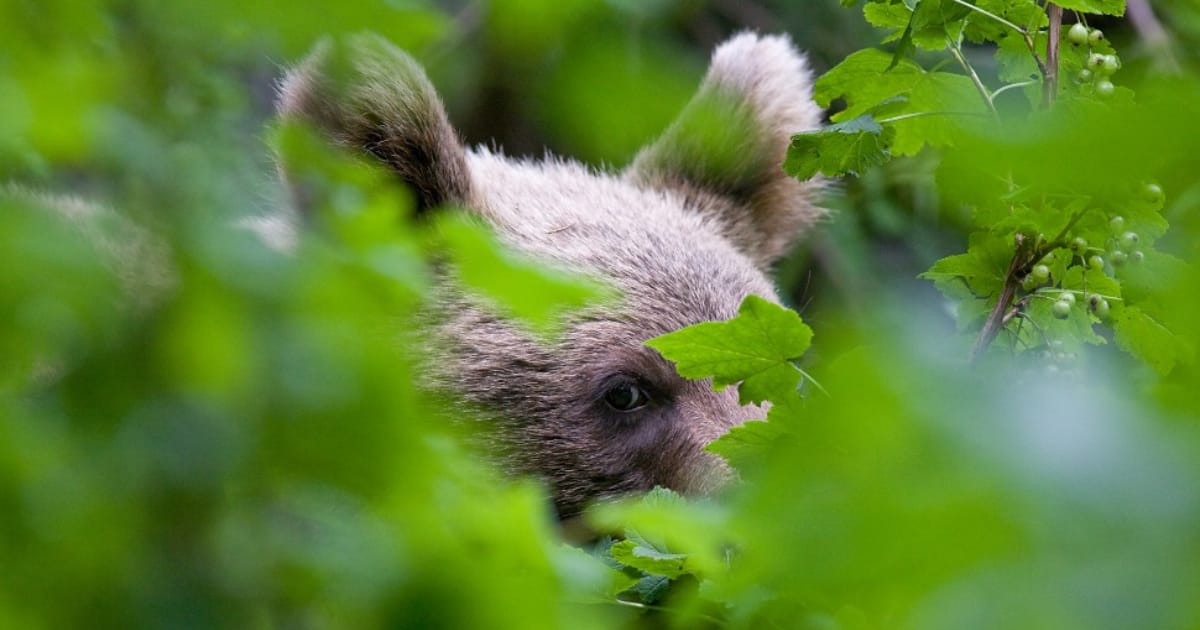
Our overview of bear attacks in Slovakia covers why attacks happen, when they happen and who they happen to.
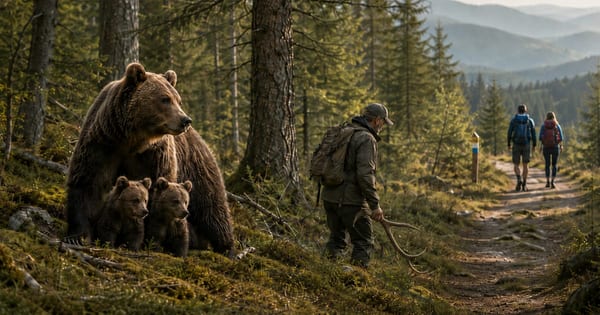
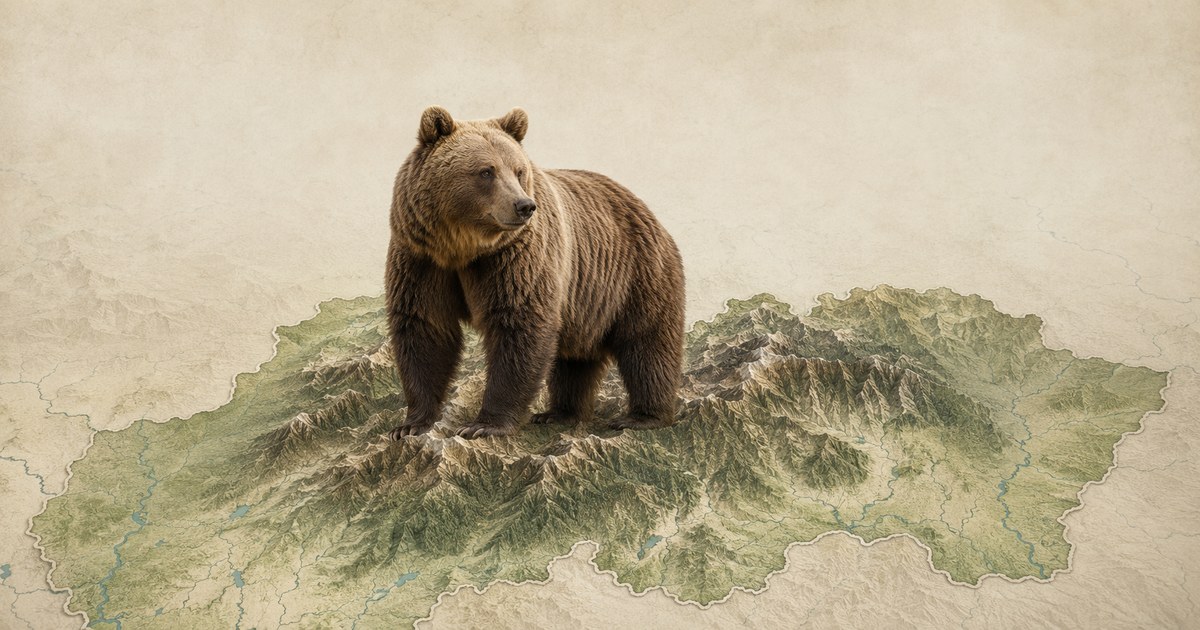
Bears in Slovakia covers how many bears live in Slovakia, where you can expect them and how to avoid a close encounter in the first place. Here, we focus on what happens once an attack has already begun.
Second zero: you do not see the bear coming
In June 2021, Roman Noga was fitting a railing along a trail in the Šútovská Valley when he crossed paths with bear cubs. He spotted their mother only when she stood a few steps away: “It was about five meters from me. It started roaring, looked at me and charged straight away.” (wolf.sk archive)
In our record, five meters is actually above average. Of the nine cases where the distance of first sighting can be documented, six fall within the 0 to 5 meter band. A man in Dúbravy was knocked down from behind before he even realized the bear was there. The same pattern appears in accounts that give no exact distance:
- “Suddenly it burst out, jumped on my stomach and my arm,” said a mushroom picker attacked near Liptovská Kokava, who never saw the female bear in the tall grass and could not hear her over the roar of the river. (tvnoviny.sk)
- “A bear just flies out of nowhere. It was an instant. It came at me, I fell on my stomach and at that moment it reached me,” says a mushroom picker from Malinová. (noviny.sk)
- “I disturbed the bear today, but I had no idea she was there,” said Ján Kubica, whom a female bear surprised by jumping out of tall grass about ten meters away near Kanianka. (ta3.com)
- “We were walking along the trail when we suddenly heard a cub. We turned around, and she was already on us,” is how Michal described the attack near Hriňová, in which a female bear severely injured his friend Igor and bit Michal on the arm. (noviny.sk)
The accounts and official site inspections also show why people did not notice the bear in time:
- dense young growth where visibility is limited to a few meters (the ŠOP SR inspection after the attack on a runner in the Valčianska Valley confirmed “reduced visibility of the terrain with young beech forest”),
- tall grass (Liptovská Kokava, Kanianka, Hybe 2025),
- the roar of a river or stream drowning out the bear’s warning huff (Liptovská Kokava according to the intervention team; the mayor also mentions a roaring stream in the fatal attack in Liptovská Lúžna),
- an attack from behind (Dúbravy, Stráňavy),
- a break in the terrain that blocks the view.

At Želobudzská Skala, a bear scrambled up from below the crag in ten seconds and reached hikers who had no idea it was there until the last moment: “We were coming to the top from one side of the hill and the bear was on the other, so it definitely did not hear us. When it spotted me on the crag, that was when it charged,” the attacked hiker Tomáš told HIKING.SK.
Runners: zero time on both sides
Eight of the 58 cases involve runners. That is not a coincidence. A runner is fast, quiet and alone: he gives the bear no time to detect him and leaves himself no time or distance to react. In the Valčianska Valley, a runner ended up in critical condition after an attack by a female bear. Near Liptovský Ján, a female bear chased down a runner and repeatedly bit into his calf as he tried to climb a tree.
The man attacked by bears near Stráňavy in 2026 had been running for two hours and was walking uphill: “After about twenty meters I heard some noise behind me, like a dog growling. I looked back and there were three big bears, one of them running toward me, as if from behind.” (Žilinský večerník) By the time he noticed the bears, one was already running at him.
The charge and the contact: seconds, not minutes
How long does the attack itself last? The estimates from people who survived one are surprisingly consistent.
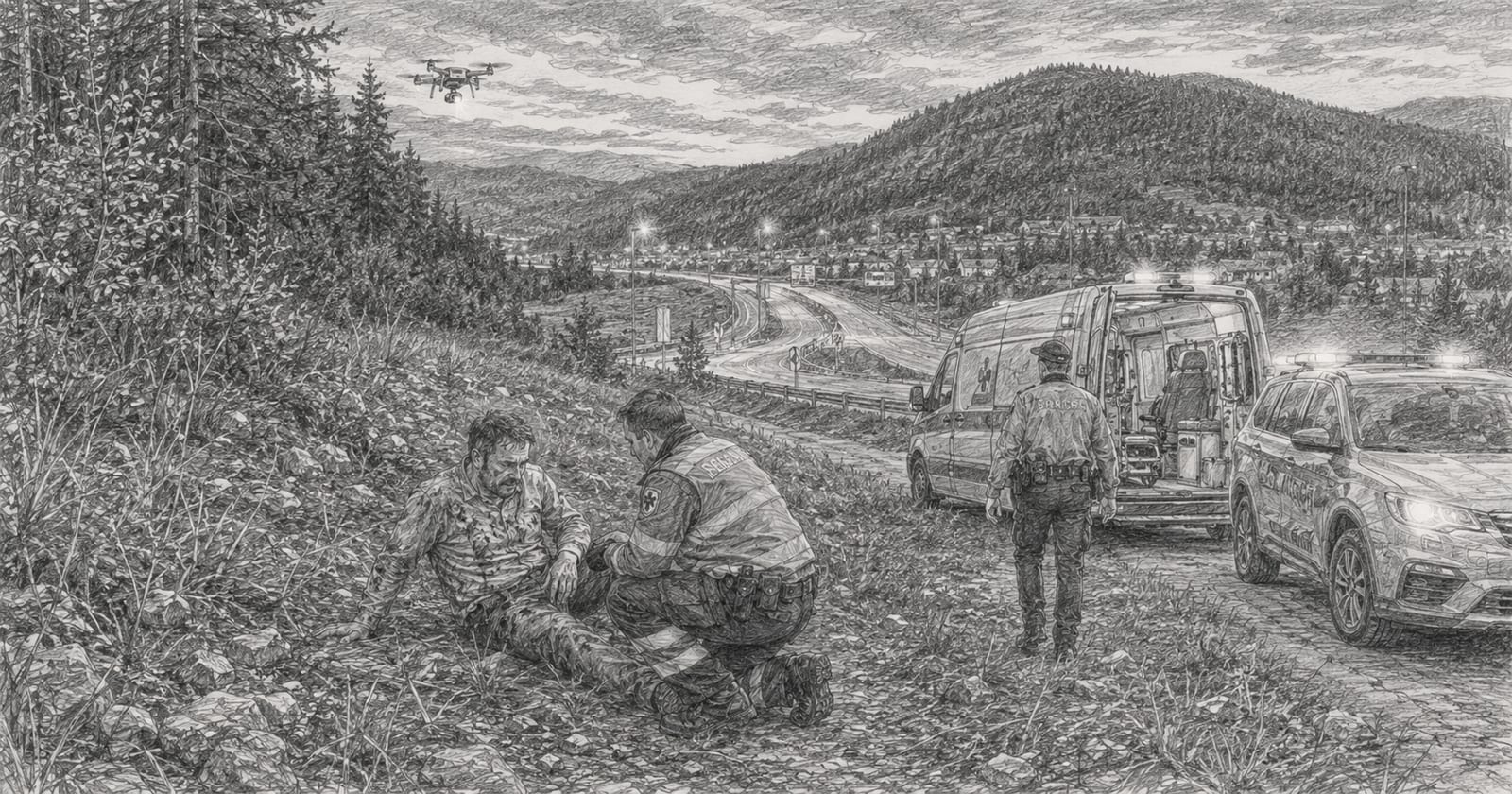
“The attack itself lasted maybe 30 to 60 seconds,” says the runner from Stráňavy. Tomáš from Želobudzská Skala, who was attacked in two waves, said: “It was not even the attack. That took a few seconds, the first and the second time, but the twenty-minute wait” for the helicopter was the worst part. Michaela Sedláčková, who drove a bear off her son with a pitchfork, summed up the attack in one sentence: “It was a matter of seconds.”
Contact typically follows the same pattern in our record: a knockdown followed by several bites, most often to the thighs, calves, shoulders and arms. Serious head and neck injuries are less common, but they are among the gravest. A female bear scalped Erika from Hradište and mauled her neck and shoulder. Her wounds took roughly ninety stitches. In three of the four fatal cases, the cause was a neck injury or a severed artery.
In several cases, the attack came in two waves: the bear broke contact, withdrew and attacked again a moment later. At Želobudzská Skala, the men managed to call the emergency line between the two waves. In Jakubovany, the female bear left after the man shouted, but came back because her cubs were still in the plum trees in the orchard. Near Kvačany, the bear left forester Martin Jambrich when he stopped moving. Cars on the road then pushed it back up the slope, and it attacked a second time.
Repeated biting and mauling are the exception. In our record, they appear mainly in the 2022 attack in the Valčianska Valley, where the female bear kept returning to the downed runner: “The bear attacked him three times in total. First it went for his face and head, then it came back to the lying man twice more and bit his whole body, arms, legs and torso,” reported the Mountain Rescue Service. The man ended up in an induced coma but survived.
The case from Hybe shows why seconds matter. In October 2024, six relatives were picking mushrooms there, but each searched on his own. During the brief contact, the bear severed “one of the main arteries of the lower limb,” as the air rescue service’s spokeswoman put it (hlavnydennik.sk). His brother ran over, and the family started resuscitation immediately, yet he died within minutes. A group can protect you only if it stays together and makes its presence known. When six people scatter through the forest, everyone is alone during the decisive seconds.
The end of the attack: the bear usually leaves on its own
This is, in our view, the most important number in the whole article: in 41 of the 58 documented attacks, the bear left on its own after brief contact, without spray, gunfire or any other intervention.
That pattern matches a defensive attack. The bear is trying to remove a threat rather than take prey, most often after a close-range surprise or while defending cubs. Once the person no longer appears to be a threat, the attack often ends. The same moment appears throughout the accounts:
- “The victim shouted, then she left him,” mayor Elena Grňová wrote about the attack in Dúbravy. (lesmedium.sk)
- “When I stopped shouting and played dead, it still tried to roll me onto my back. I managed to stay on my stomach and then it left,” says the runner from Stráňavy.
- “Then the cub called and ran across the trail above us. The mother let go of me that instant and ran after it,” is how hiker Peter Jankovič described the end of the attack in the Bobrovecká Valley. (myorava.sme.sk)
In 10 cases, the bear did not leave on its own. In seven of them, gunfire ended the attack. In Závažná Poruba, honking cars and shouting people scared the bear away. In Sučany, the man fought his way through the highway fence, and the female bear did not follow him across it. In the Demänovská Valley, the bear stayed beside the body of a woman who fell into a gully while fleeing from it (officially she died from the fall, not from contact). In the remaining seven cases, no source recorded how the attack ended.
This number is no reason to be careless. Every account in this article makes that clear. It does, however, refute the idea that a bear attack automatically means death. Most of the cases we documented ended with the bear simply leaving. The person attacked must survive the seconds until it does while keeping damage to the head and neck to a minimum.
What actually saved people
For all 58 attacks, we recorded how the attack ended and what demonstrably helped the people attacked. We list the options according to how often they appear in the record.
Shouting, best from another person
Shouting was the most frequently documented response before a bear broke off its attack. “I shouted, I even tucked my dachshund away, we started shouting, so she ran off,” is how a forestry worker described the end of the attack near Nedožery-Brezany. ŠOP SR officially confirmed the same sequence: “After the forestry workers shouted, she broke off the attack and fled the site.” (pravda.sk) Near Partizánska Ľupča, a father’s roar stopped a bear charging at his eight-year-old daughter: “The first time I roared at it, the bear turned around and started running away down the trail.” (tvnoviny.sk) Shouting also ended or interrupted attacks in Dúbravy, Horná Ves, Jakubovany and near Hradište, where both the woman attacked and her husband shouted.
Shouting does not work every time. The runner from Stráňavy had the opposite experience: “I shouted at the bear to leave me alone, but that provoked it even more.” Near Šútovo in 2025, a son shouted at a female bear in vain while she attacked his father. In cases where shouting worked, the person making the noise was often someone else or a group. To the attacking bear, those voices add a new threat to the situation. This gives a group that stays together another advantage over people who scatter through the forest.
Lie down, cover your neck and stop moving
Once contact happens, the same response appears throughout the accounts: lie on your stomach, put your hands over the back of your neck and stop moving. Erika from Hradište gave her only interview a year after the attack, in Czech for CNN Prima NEWS: “I kept telling myself that above all, I had to survive.” A man from the village who knew the details of the attack described her position: “That was probably a great stroke of luck. She was trying to protect herself that way.” (pravda.sk) She survived.
The runner from Stráňavy lay down instinctively and covered the back of his neck. The female bear bit his forearm, shoulder, back and backside, places that could heal. When he stopped making noise, she tried to roll him onto his back, failed and left. Tomáš from Želobudzská Skala described the same sequence: “The bear tried to roll me over too while I was in that position, but it did not manage it, and when I stopped moving, it left.” Forester Martin Jambrich near Kvačany said: “I stopped moving and the bear ran off down to the road.”
The same principle applies throughout a defensive attack: a person lying still and silent no longer appears to be a threat. In several cases, the bears tried to roll over the person lying down. When they failed, they left.
Anything between your head and the teeth
None of the people attacked had time to choose how to defend themselves. They used whatever was in their hands or on their backs. Even an ordinary object helped protect the head and neck.
A backpack. Tomáš at Želobudzská Skala had recently completed training with the bear intervention team through work: “I pulled it close, curled up and dragged the backpack up to my head so my neck was protected, and held it with both hands. That is when it bit me in both shoulders, and when I stopped moving, it left.” The backpack covered the back of his neck, and the bear bit his shoulders instead of his neck.
A wicker basket. When Ján Kubica was knocked down near Kanianka, the basket tied to his backpack fell directly over his head and neck. “It bit that basket off my neck. It would have bitten into my head otherwise,” he told TV JOJ. (dobrenoviny.sk) The doctor stitched seventeen wounds. He survived.
Trekking poles. Peter Jankovič in the Bobrovecká Valley fell backward onto his backpack and held the female bear away from his body with his poles: “This way she could only reach my legs, because I kept jabbing at her with the poles.” The attack ended only when the cub ran across the trail. The poles kept his injuries limited to his legs.
A pitchfork. On a farm in Háj, Michaela Sedláčková drove a bear off her twenty-year-old son: “What is the first thing you grab on a farm to defend yourself? A pitchfork, of course. When I stabbed into it, it bounced off like off a tire.” (spravy.stvr.sk) When the bear turned on her, she held the pitchfork in front of her like a shield. This case has a unique epilogue in our record: two months later, a car hit a bear a kilometer and a half from the farm, and the taxidermist found healed puncture wounds from a sharp object on its hide. It is the only case in our whole record in which the attacker’s identity was physically confirmed.
An axe. Peter from Belá faced repeated charges by a female bear: “I hid behind a tree, and every time she attacked I struck her in the head. If I had not had that axe, she would have killed me there.” (zilinak.sk) After the second or third blow, she turned and left with her cubs. He escaped without injury.
These cases do not mean you should carry a pitchfork. They show how much it matters to protect your head and neck with whatever you have at hand. A backpack on your back is passive protection you have with you anyway.
Spray: what decides is whether you can draw it in time
Bear sprays are often debated after attacks even when the exact sequence of events is unknown. In our record there is not a single case in which spray used in time, before contact, failed.
The cases labeled “spray failure” unfolded differently. Near Hriňová, the attack came as a surprise from behind, and the sprays were used only once the female bear was tearing at Igor’s face. The Lesy SR spokeswoman described the result with the words “the defensive effect did not materialize and it did not stop the bear” (teraz.sk). At Belá, the accounts of what happened conflict. According to one interpretation of the trail camera footage, the axe came first, and the spray only hit the retreating animal. The man himself admitted that he could not find the spray in the shock: “I had bear spray too, I did not know which side I had it on, that is what shock does.” (noviny.sk) A photographer in Fačkov had his spray with him, but at three meters he simply had no time to draw it.
Our record contains a single unambiguously documented successful use of spray: Šútovo 2025. A female bear attacked a father there and then threw his son off a rock when he came to defend him: “Dad then ran up, used the spray and she fled,” the son told tnlive.sk. The spray worked instantly, and the female bear left even though the attack was already underway.
The practical question, in our view, is whether you can draw the spray within a second. Spray stored in your backpack will probably never get used in an attack from five meters. You have a chance to use it in time if you carry it in your hand or in a holster on a strap, one you can open without looking.
Lukáš from GearCheckers found himself fifteen meters from a female bear on a ridge years ago and got through the encounter thanks to spray. Since then, we have carried ours where we can draw it without looking. Our bear spray test covers which sprays held up in our testing and how to carry them.
Firearms: they end attacks, but not reliably and not for everyone
A firearm was used in ten cases, almost exclusively by hunters, foresters and people who carry one for work. Four female bears died in the self-defense shootings.
The record also shows the limitations: a shot does not reliably stop an attack. Near Višňové, a wounded bear did not break off its attack. It turned on the shooter and mauled his arm. Near Očová in 2025, a gamekeeper fired, missed, and the female bear attacked him despite the shot. At Hrboltová, a father’s own shots did not stop the attack on him. The female bear was killed only when his son fired from point-blank range. A hunter near Liptovská Porúbka in 2026 described how a female bear ignored his warning shot and knocked him down. He then fired from the ground without aiming until he had emptied the magazine.
We include this for completeness. It is not a recommendation. For people who do not carry a gun, the relevant options are the other ones described above.
What failed in the record: running and trees
Running is the natural reaction, and it appears in the record more often than the other responses. But when a bear decided to pursue, running did not help: in the Sučianska Valley, the animal “ran the man down”; near Liptovský Ján, the female bear caught the runner and repeatedly bit into his calf as he tried to climb a tree; and in the Demänovská Valley, fleeing ended in a fall into a gully and death. Over a short distance, a bear is faster than a human, and bears climb trees. Those three cases from our record show why running and climbing are poor escape options.

What to do in a bear attack: the order the data supports
Here are the options in the order our data supports. Every attack was different, so treat this as a summary of what helped the people in our record, not as a universal manual:
- Most often, the attack ended with the bear leaving on its own. Trying to defeat the bear is not the goal. Survive the seconds until it leaves, and protect your head and neck.
- If you see the bear charging and have spray in your hand, use it. Our record has no case in which timely use failed. Spray stored out of reach will probably never get drawn in time.
- If contact happens, lie on your stomach, cover the back of your neck with your hands and backpack, stay quiet and do not move. This is the procedure described by the survivors from Hradište, Stráňavy, Želobudzská Skala and Liptovská Anna.
- If other people are near you, their shouting can break off the attack. Shouting by a second person or a group demonstrably interrupted attacks. Shouting by the victim alone during contact had mixed results.
- Do not run and do not climb a tree. The cases where people tried it against a determined bear did not end well.
Our overview of bears in Slovakia explains how to avoid the encounter in the first place.
A note on how we work with the accounts
The quotes in this article are our translations of statements published in the original sources, including the colloquial phrasing. We link the Slovak source for each case. Erika from Hradište gave her only interview in Czech, and we translated it the same way. We use only the names published by the media. Where the people attacked wished to remain anonymous, we respect that.
The accounts also show how memories can shift over time. A day after the attack, the forester attacked near Kvačany described an animal of roughly a hundred kilograms that he spotted from fifteen meters. In an interview two years later, it had become up to 150 kilograms and thirty meters. A shift like that is natural in memories of extreme stress. That is why we give preference throughout this article to accounts from the first days after each attack.
What to take away
A bear attack lasts seconds. In a defensive attack, the bear is usually trying to remove a threat rather than take prey. In 41 of the 58 documented attacks, it left on its own after brief contact. The responses that most often helped people through those seconds were shouting by others, lying flat with the head and neck protected, shielding the head with whatever was at hand, and using spray when they managed to draw it in time.
Every documented case since 2021, with an analysis of the circumstances, is included in our article on bear attacks in Slovakia. The current bear distribution and a district-level attack map are in Bears in Slovakia, and the gear coverage is in our bear spray test.