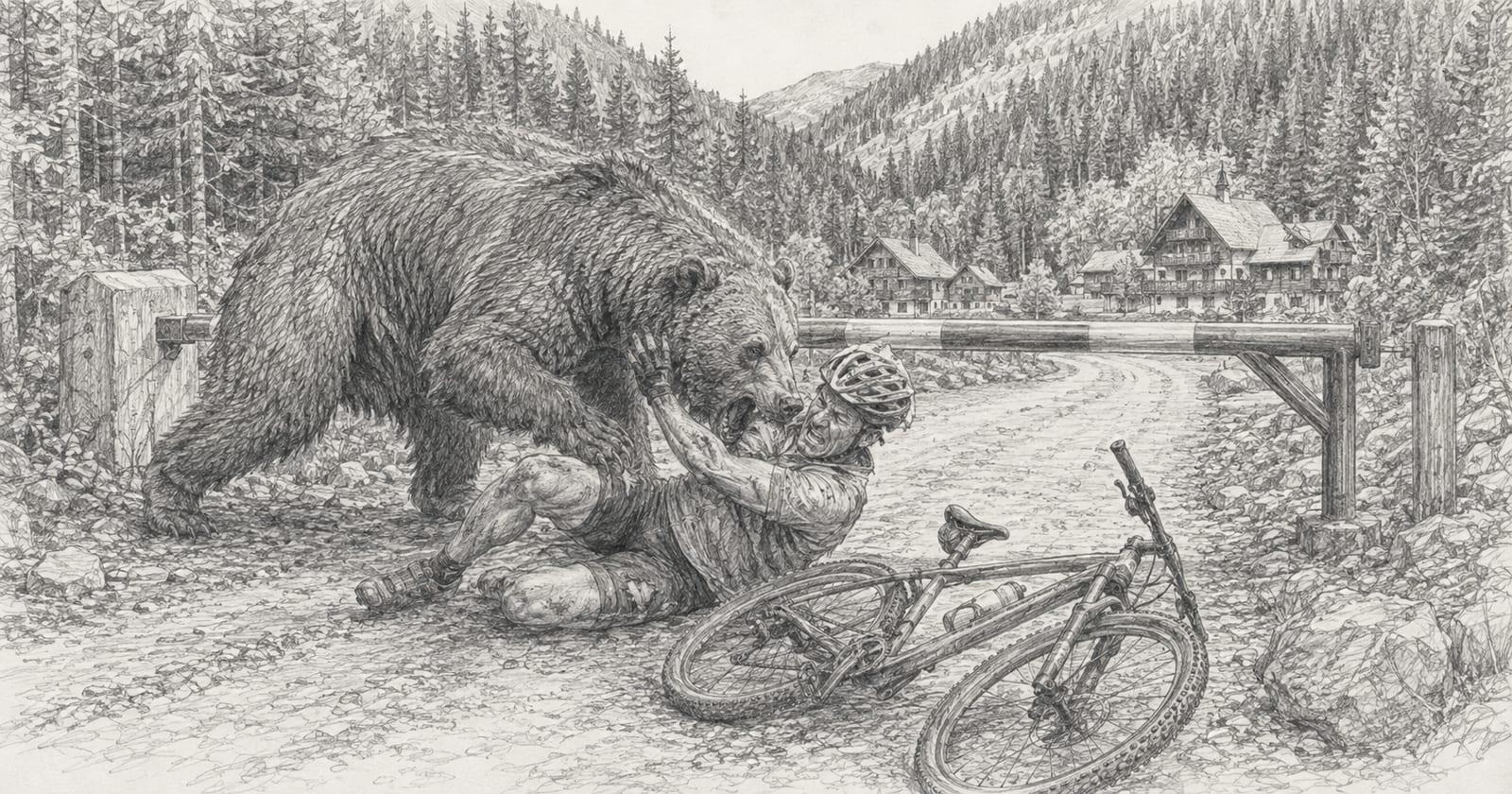
Published at Aug 9, 2026 , Updated at Aug 11, 2026
 Jakub Mrocek
 Bear Attack near Turany, Slovakia (August 2026): What We Know
Updated 11 August 2026. This is a developing case; we update the page as new facts are published.
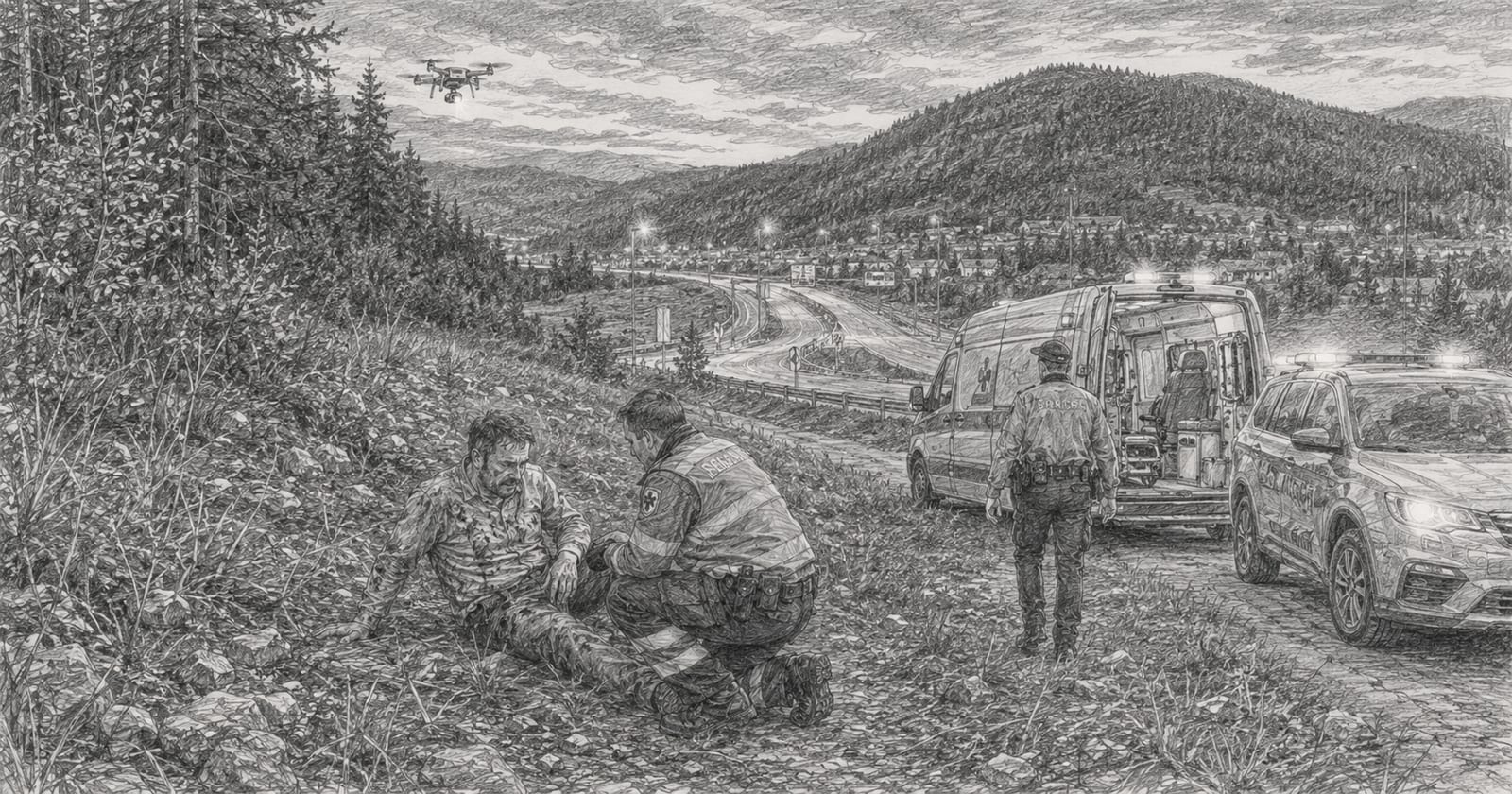
On Sunday 9 August 2026, in the early evening, an injured 42-year-old man was found at the exit of the D1 highway at Turany in northern Slovakia. He was taken to the hospital in Martin with polytrauma and injuries to the head and chest. The police initially reported only a possible bear attack. That same night, however, the bear intervention team launched a search, located a female bear with two cubs using thermal-imaging drones, designated her as the attacker, and eliminated all three animals. A day earlier, a bear had attacked a cyclist in Valčianska Valley on the opposite side of the Turiec basin. The facts below can be verified from the cited sources.
The case at a glance
| When | Sunday 9 August 2026, early evening; the exact time was not published |
| Where | at the D1 highway exit for Turany (Martin district); the regional paper MY Turiec places the attack near the Turany-Trusalová highway feeder road, no official attack site was published |
| Who | A man (42); what he was doing in the area is not known |
| The bear | A female, 136 kg, estimated age 18 years, extremely worn teeth; accompanied by two cubs (23 and 25 kg) |
| Sequence | Not published; the attack has no known witness, and the victim has not yet spoken publicly |
| Injuries | polytrauma, head and chest injuries; hospitalized at the university hospital in Martin; the daily Pravda reported serious injuries, MY Turiec serious bite and laceration wounds |
| Defense | Not known |
| The bear’s fate | The intervention team eliminated the female and both cubs; announced on the morning of 10 August |
What is documented
Regional police spokesperson Zuzana Šefčíková provided the first information: the injured man had been found at the D1 exit, and the nature of his injuries suggested a possible bear attack (all quotes are our translation from Slovak).
“Police patrols were immediately dispatched to the scene; they secured the surroundings and are monitoring the situation. The man suffered injuries and was taken to the hospital. The Brown Bear Intervention Team was also called to the scene.” (Zuzana Šefčíková, Žilina regional police, via the TASR news agency, 9 August 2026, in Slovak)
The emergency services dispatched a physician-staffed ambulance. According to EMS dispatch spokesperson Petra Klimešová, the patient was “transported to the hospital in Martin with a diagnosis of polytrauma and injuries to the head and chest” (tnlive.sk, 9 August 2026, in Slovak). That evening, the State Nature Conservancy (ŠOP SR) listed the case as the second reported bear attack within the territory of the Veľká Fatra National Park authority that weekend and advised against travel outside built-up areas in the evening and at night.
The overnight search and the elimination of the bear
After the man was found, the Fatra intervention team launched a search operation with the volunteer fire brigade from the neighboring village of Sučany.
“Two unmanned drones equipped with thermal imaging were deployed to monitor the area. The attacking female bear and her two cubs were located within a short time using this technology.” (Juraj Žiak, Fatra Brown Bear Intervention Team, 10 August 2026, in Slovak)
The team then eliminated the female and both cubs, citing an immediate threat to the health and lives of residents in the direct vicinity of transport infrastructure. The elimination was first announced on Monday morning by Filip Kuffa, state secretary of the Slovak environment ministry. The exact time of the cull was not published.
“The subsequent examination of the culled animal found that the female had extremely worn teeth, indicating her advanced age and a possibly reduced ability to obtain natural food.” (ibid.)
The female weighed 136 kilograms, and the team estimated her age at 18 years, making her the oldest bear in our records. The cubs weighed 23 and 25 kilograms.
What we do not know yet
- Where exactly and how the attack happened. The D1 exit is where the man was found. Where the contact occurred, how it unfolded, and what may have provoked the female were not published. The presence of cubs suggests that she may have been defending them, but no source has confirmed that.
- What the man was doing there and whether he was alone. He has not yet spoken publicly.
- How the team determined that the eliminated female was the attacker. The published account says only that drones located her near the site. No DNA comparison or other matching method was disclosed.
- The patient’s current condition beyond the initial diagnosis, and whether police have formally closed the case.
What to watch for when reading the news
“The bear that mauled a man.” The wording comes from a social media post by the state secretary of the environment ministry and was picked up in headlines. The published medical information describes polytrauma and injuries to the head and chest; the daily Pravda reported serious injuries. No more detailed description of the wounds or the attack itself has been released. The word “mauled” is therefore not supported by any published finding.
The identification of the attacker is the team’s conclusion, not a proven match. A day earlier, the police described only a possible attack, and no witness has been reported. The team located the female by drones near the site and designated her as the attacker. It did not disclose how the match was made, and the news site tnlive.sk retained the conditional “allegedly attacked” in its headline. The Závažná Poruba case a month earlier followed the same pattern: the elimination is a fact, while the identification of the attacker is an assumption.
Turany, or Sučany? Most sources place the discovery at the D1 exit for Turany, but an earlier interez.sk headline placed the man “in Sučany”. The exit lies between the two villages, and the Sučany volunteer firefighters assisted in the search. Until the site of the attack itself is known, the location cannot be identified more precisely.
“The second incident in Veľká Fatra this weekend.” That is ŠOP SR’s framing. The first attack of the weekend, in Valčianska Valley, geographically occurred in the Lúčanská Malá Fatra range, while Turany lies at the foot of the Krivánska Malá Fatra. “Veľká Fatra” here refers to the administrative territory of the national park authority and its intervention team, not to the mountain range where the incidents took place.
“He was transported in critical condition.” The news site Refresher used “critical condition” in its headline. No official source says critical: the emergency services reported polytrauma with head and chest injuries, and Pravda wrote of serious injuries. Until the hospital comments, the patient’s exact condition is unknown.
The location in context
Turany lies in the Turiec basin on the Váh river, along the D1 highway corridor between Martin and Kraľovany. The forested lower slopes of the Krivánska Malá Fatra rise above the village and include the Trusalová recreation area. Our records include earlier cases around Turany. In July 2024, a female bear with three cubs attacked a cyclist on a paved forest road in the Zajacová area above Trusalová, roughly three kilometers from where the man was found in this case. The neighboring Šútovská Valley has documented cases from 2021 and 2025. If MY Turiec’s placement at the Trusalová feeder road holds, both local cases happened on the same side of the village, just a few kilometers apart.
How our record is compiled, and why we treat attacks around villages more cautiously than forest cases, is explained in our analysis of bear attacks in Slovakia. Our overview of bears in Slovakia covers where bears live in Slovakia, which districts see the most sightings, and how rare attacks actually are, including a district-by-district attack map. What actually helped people once an attack was under way is covered in how to survive a bear attack. If you hike or ride in bear country, see our field test of bear sprays and our analysis of how bear spray performs in real attacks.
Similar cases
- Valčianska Valley (August 2026): the day before the Turany case, a bear attacked a 55-year-old cyclist at the valley entrance; we cover it on a separate page
- Šútovo/Turany, Zajacová area (July 2024): a cyclist attacked in the early evening by a female bear with three cubs, hospitalized in Martin
- Závažná Poruba (July 2026): the same aftermath pattern, with the team eliminating a bear it designated as the attacker without publishing the identification
Sources for this case
All sources are in Slovak.
Official:
- ŠOP SR: Second brown bear incident in Veľká Fatra this weekend (9 August 2026) · the reported attack, drone monitoring, public advisories
National media:
- tnlive.sk: The female bear that allegedly attacked a man near Turany was shot (10 August 2026) · full wording of Žiak’s statements: the search, the drones, the elimination, the examination
- Pravda: The female bear near Turany mauled a man (10 August 2026) · serious injuries, elimination details
- TASR / teraz.sk: Kuffa: the female bear that attacked a person near Turany was shot (10 August 2026) · the elimination announcement
- TASR / TA3: An injured man was found near the highway by Turany (9 August 2026) · first report, Šefčíková’s quote, the diagnosis
- Denník N: The intervention team shot a female bear with two cubs near Martin (10 August 2026) · agency summary
Regional media:
- MY Turiec: The attacking female bear near Turany was culled along with her two cubs (10 August 2026) · location detail (Turany-Trusalová feeder road), bite and laceration wounds, park and police advisory
This page is based on the sources above and on our database of documented bear incidents in Slovakia since 2021. Where sources disagree, we say so explicitly. Last checked: 11 August 2026.