Published at May 14, 2023 , Updated at Jul 25, 2026
 Lukáš Holásek
  Jakub Mrocek
 Best Bear Spray: We Field-Tested 12 Sprays
We compared 12 bear sprays in detail to see which ones meet the recommended parameters and which ones we would not want in our hands during a close encounter with a bear.
We know from personal experience that bear spray works. But when an enraged bear is charging at you, the spray in your hand matters. We test bear sprays in the Slovak Carpathians, where encountering a bear is a real risk (see our overview of bears in Slovakia, with a district-level map of sightings and attacks, and our record of 58 documented bear attacks). We wanted to find out for ourselves how much the sprays on the market differ.
★ 1st place in our test
95%, the highest rating of 12 sprays
SABRE Frontiersman 272 ml
Bear deterrent sprayTest winner and our personal choice
- Best result in our test: the highest rating of all 12 sprays we compared.
- Proven in a real bear charge: after that experience, it is the spray we carry as our main choice.
- Highly visible orange cloud and a glow-in-the-dark safety clip you can find even in the dark.
SABRE Frontiersman is backed by more than 45 years of experience and strict certification. It is the spray we trust with our own lives in the field, and we carry it in a belt holster. SABRE sprays are designed and made in the USA and are widely available from outdoor retailers. If you live in Central Europe, we stock it in our own shop, TENTAUR.sk (site in Slovak, ships to Slovakia, the Czech Republic and Poland).
Video: Bear spray test
Watch how we tested the sprays. The narration is in Slovak, but the footage speaks for itself:
Article overview
Update May 2025: Sabre saved our lives, it is our personal choice
After an extremely intense personal experience and years of carrying bear spray every day in bear country, we decided to slightly adjust the test results. Sabre Frontiersman is a certified and proven bear spray that quite literally saved our lives during a bear encounter. It performed with maximum reliability and effectiveness, even under stress, which is why we now recommend it as our top pick.
We also made this change because of a question many of you continue to ask: which spray do we carry ourselves? The answer is now clear.
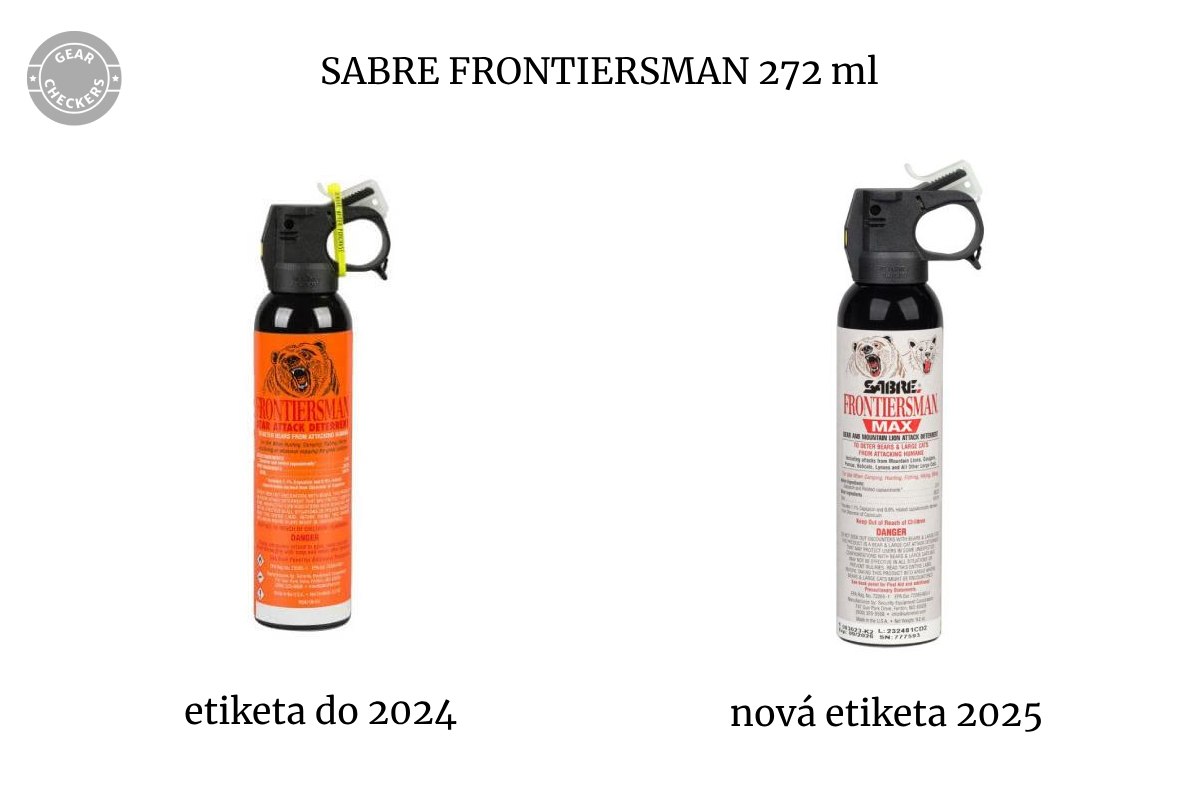
One more note: Sabre has a new label, which you can see in the photos below. The contents are identical to the original version; only the packaging design has changed.
Lukáš has written up the encounter itself in detail: what he did wrong on the approach, at what distance he fired, and how the bear reacted. Read does bear spray work, and what happened when a bear charged him.
The bear sprays in our test
| Rank | Spray | Max range | Spray duration | Cloud size | Discharge velocity | Ergonomics | Personal experience | Overall rating | Approx. price |
1. |  SABRE FRONTIERSMAN 272 ml | 8.6 m | 6.72 s | 1.96 m² | 5.6 m/s | 95% | 100% | 95% | €66 |
2. | 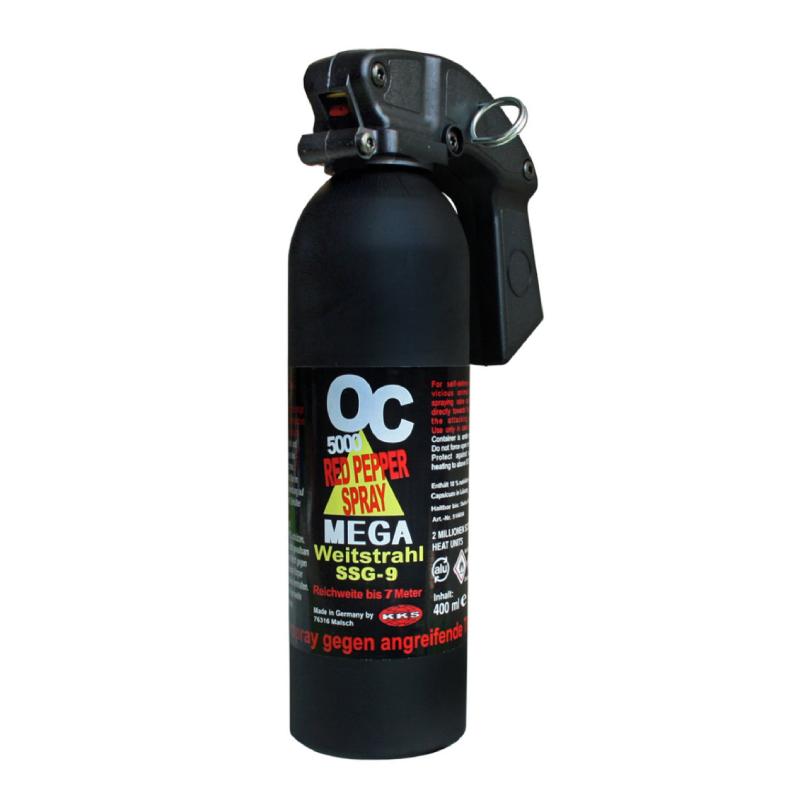 KKS OC 5000 Mega 400 ml | 8.3 m | 7.6 s | 2.72 m² | 5.2 m/s | 65% | 93% | €88 | |
3. | 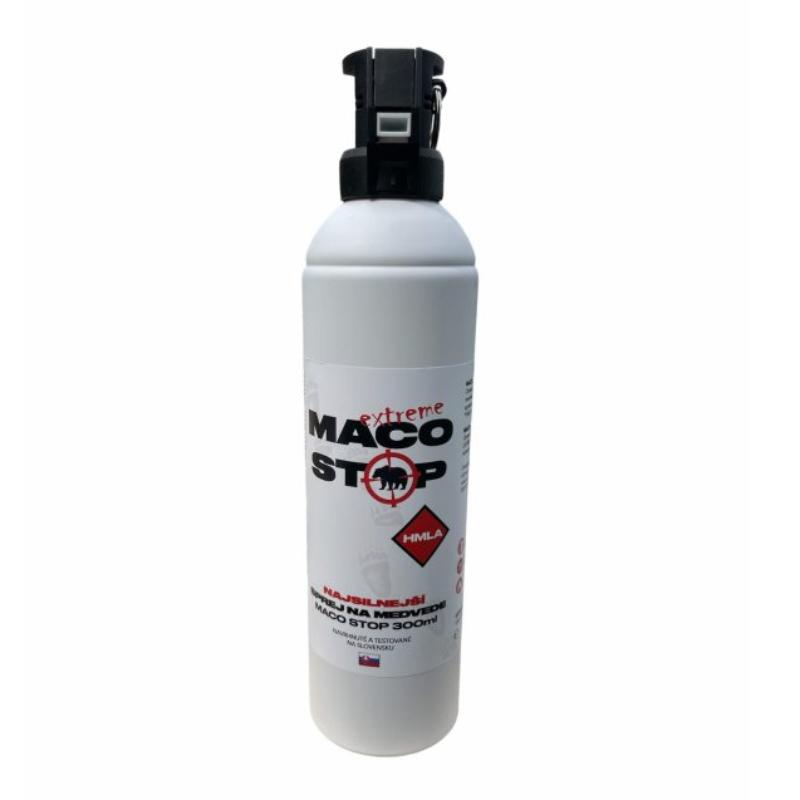 MACO STOP Extreme mist 300 ml | 8.9 m | 6.96 s | 1.86 m² | 5.6 m/s | 70% | 90% | €50 | |
4. | 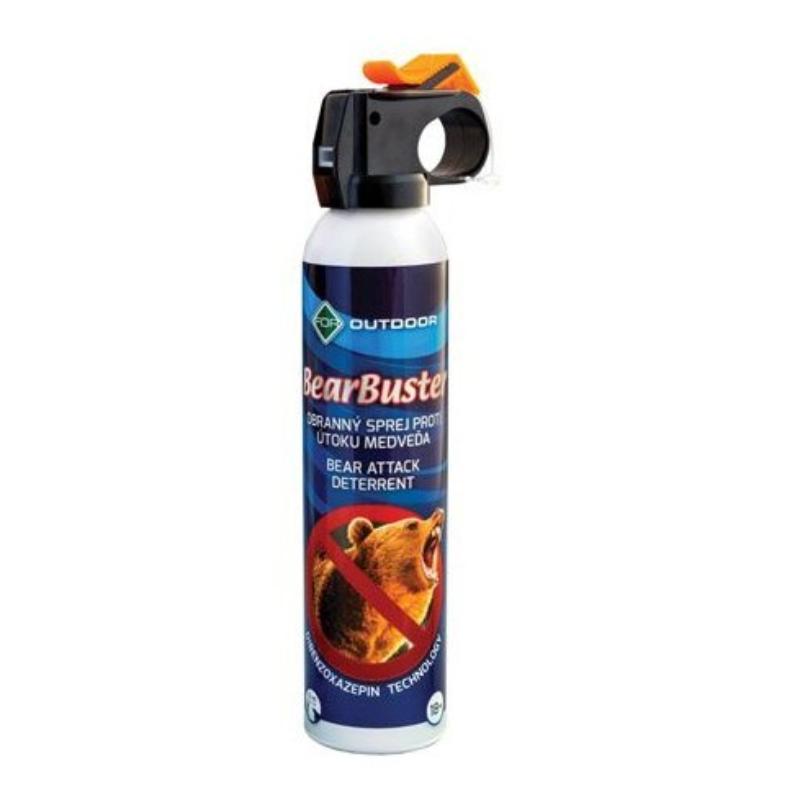 BearBuster 300 ml | 8.0 m | 7.4 s | 1.45 m² | 5.6 m/s | 80% | 88% | €80 | |
5. | 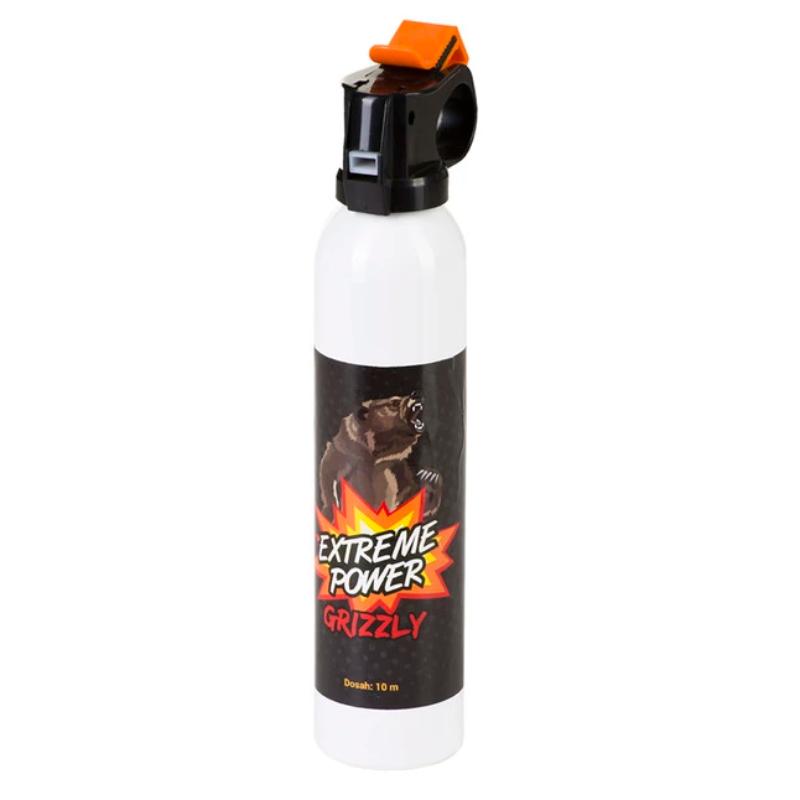 CR Grizzly 300 ml | 7.4 m | 6.84 s | 1.91 m² | 5.1 m/s | 80% | 86% | €46 | |
6. | 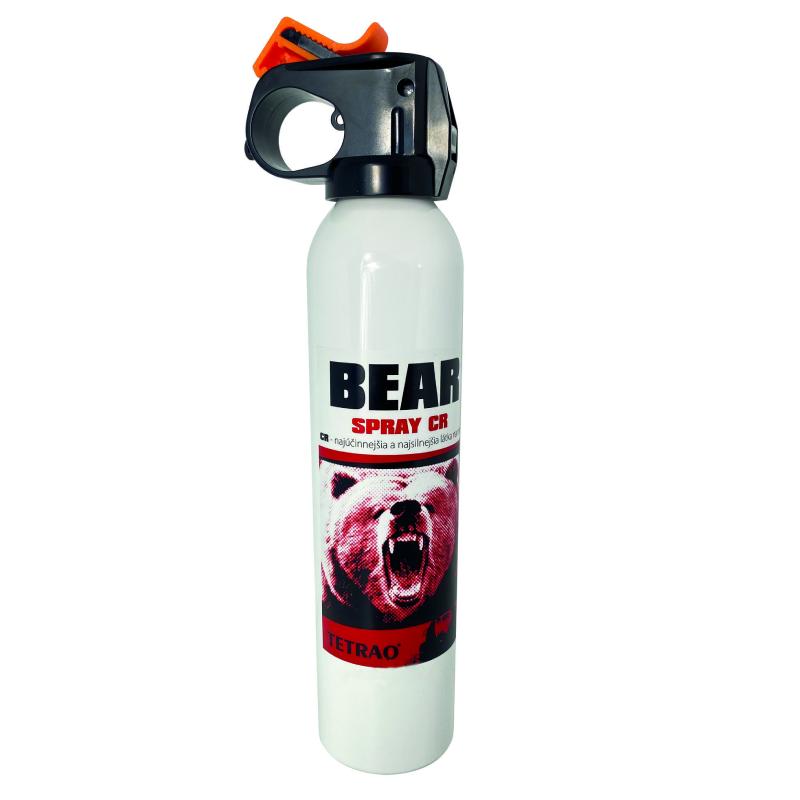 Tetrao BEAR SPRAY CR 300 ml | 6.6 m | 7.2 s | 2.01 m² | 4.8 m/s | 80% | 85% | €65 | |
7. | 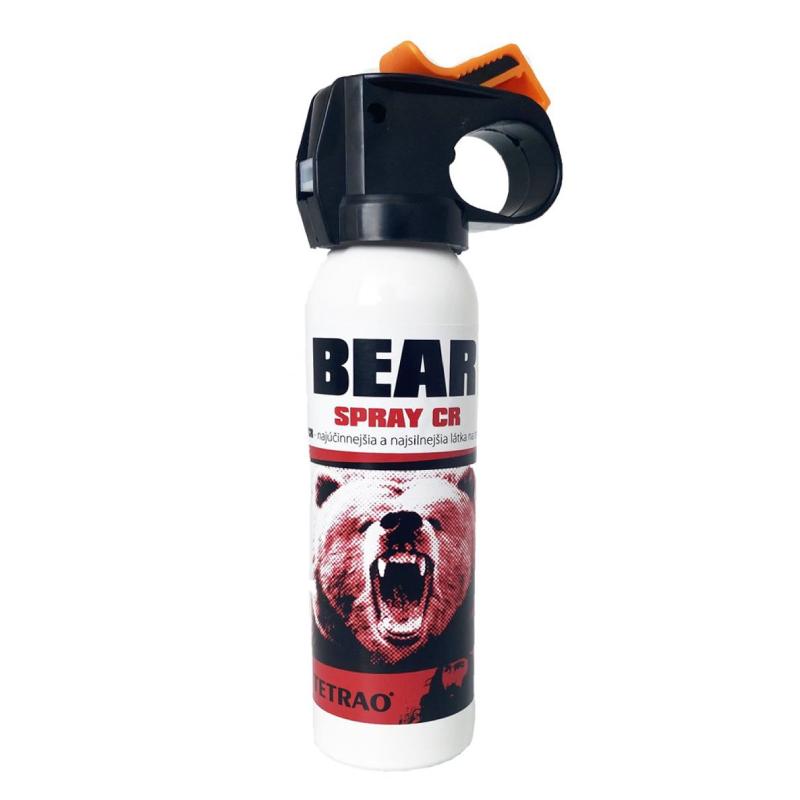 Tetrao BEAR SPRAY CR 150 ml | 8.6 m | 3.56 s | 1.89 m² | 5.6 m/s | 90% | 81% | €33 | |
8. | 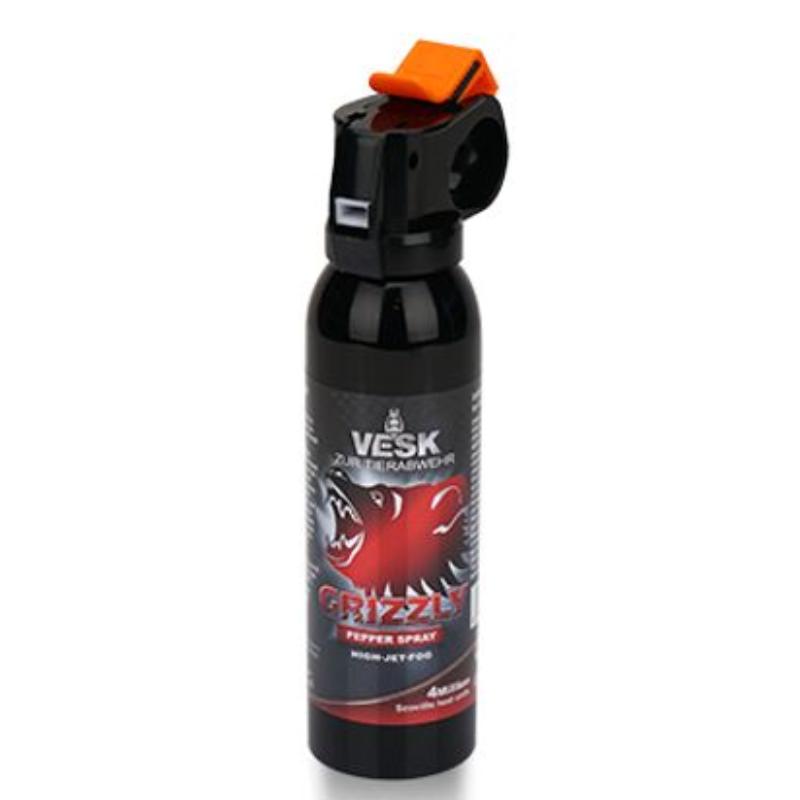 KKS VESK Grizzly 200 ml | 7.0 m | 5.32 s | 1.65 m² | 5.0 m/s | 90% | 80% | €70 | |
9. | 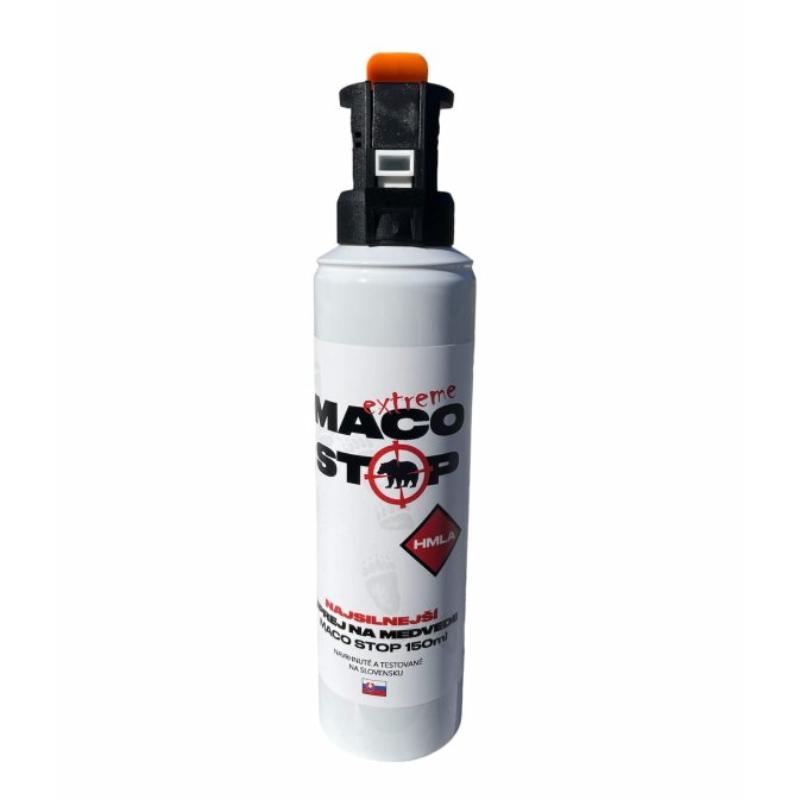 MACO STOP Extreme MIST 150 ml | 6.8 m | 4.28 s | 2.01 m² | 4.3 m/s | 80% | 75% | €40 | |
10. | 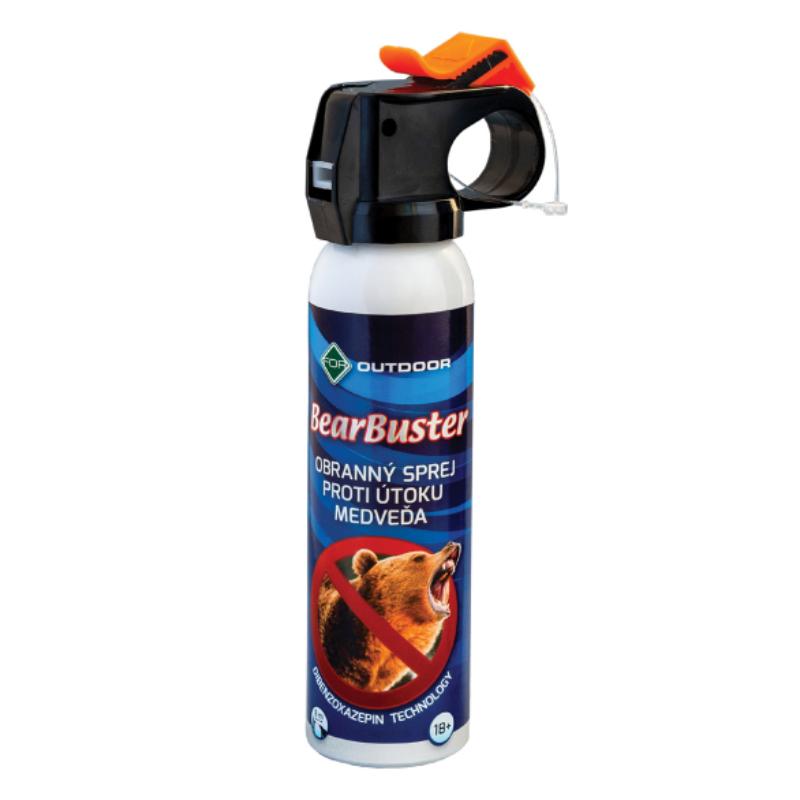 BearBuster 150 ml | 7.9 m | 3.28 s | 1.45 m² | 5.3 m/s | 90% | 75% | €50 | |
11. | 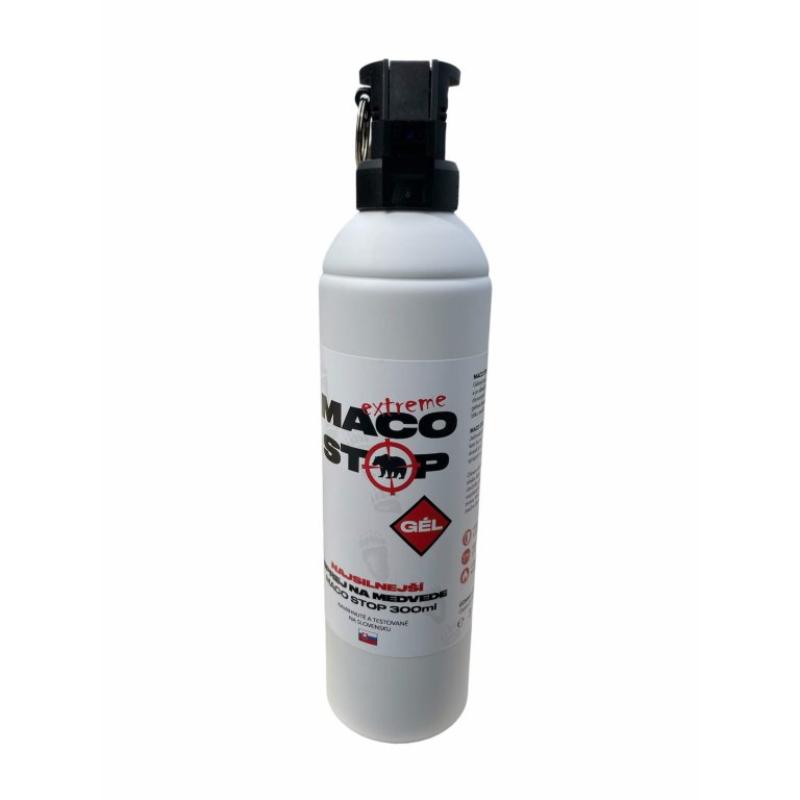 MACO STOP Extreme GEL 300 ml | 6.1 m | 7.44 s | 0.53 m² | 4.4 m/s | 70% | 71% | €60 | |
12. | 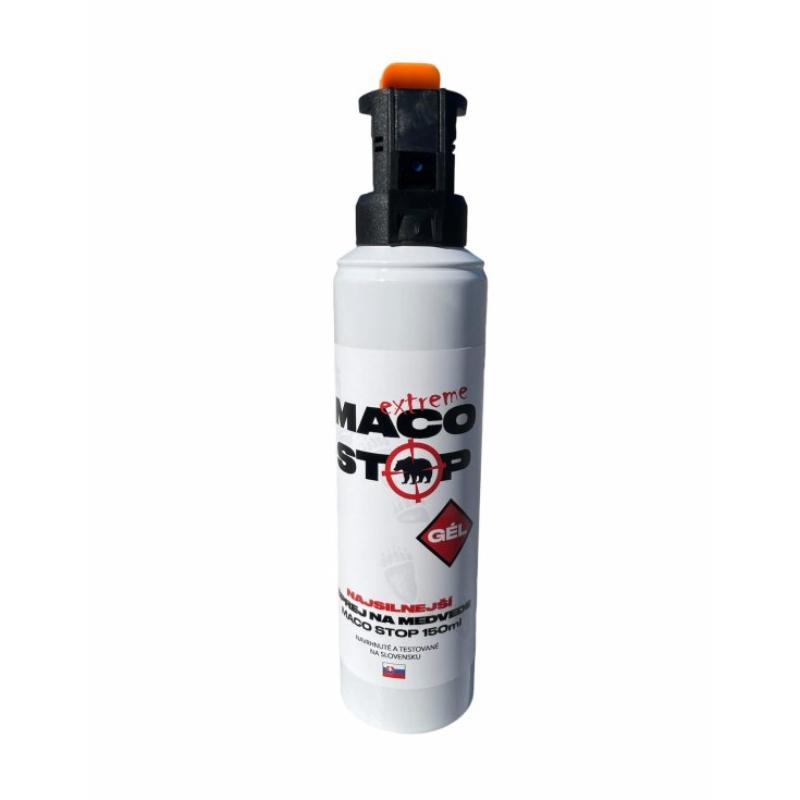 MACO STOP Extreme GEL 150 ml | 6.5 m | 3.64 s | 0.39 m² | 4.7 m/s | 80% | 61% | €40 |
Most of the sprays in this test come from Central European brands. SABRE is a US brand sold worldwide; availability of the others depends on your market. The winner’s “personal experience” score reflects the real bear charge described in the May 2025 update.
How we tested the bear sprays
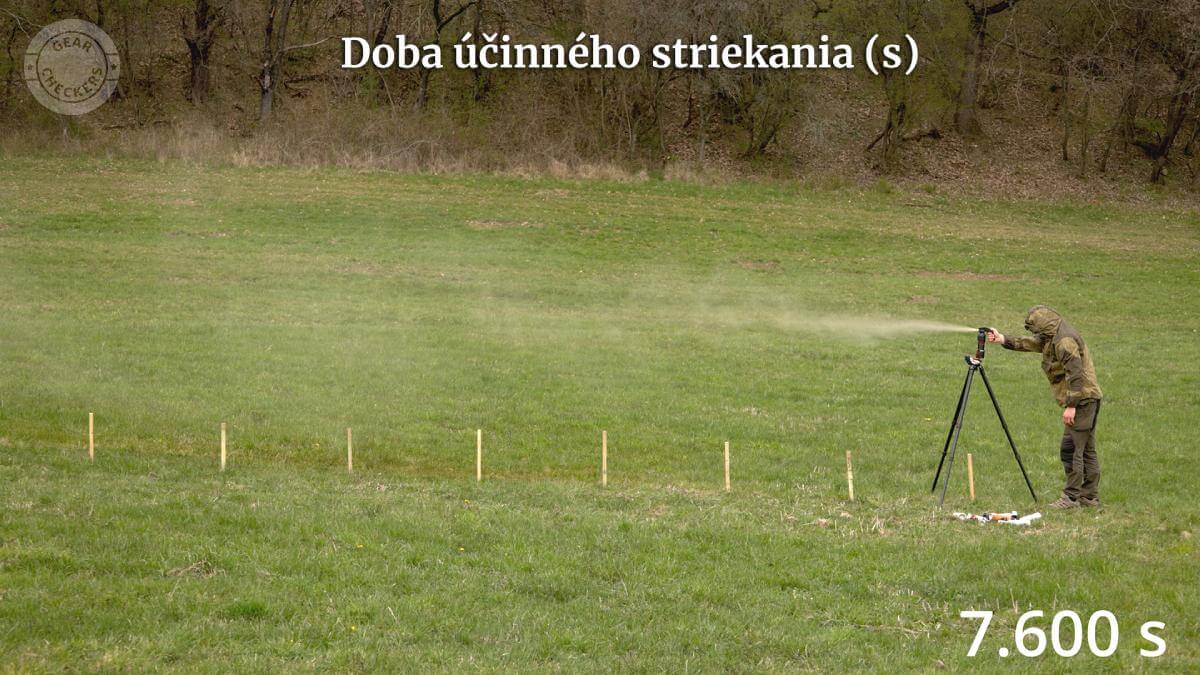
The core of our test setup was a 15 m line. At the start, at point zero, we set up a tripod that kept every spray at the same angle and in the same spot.
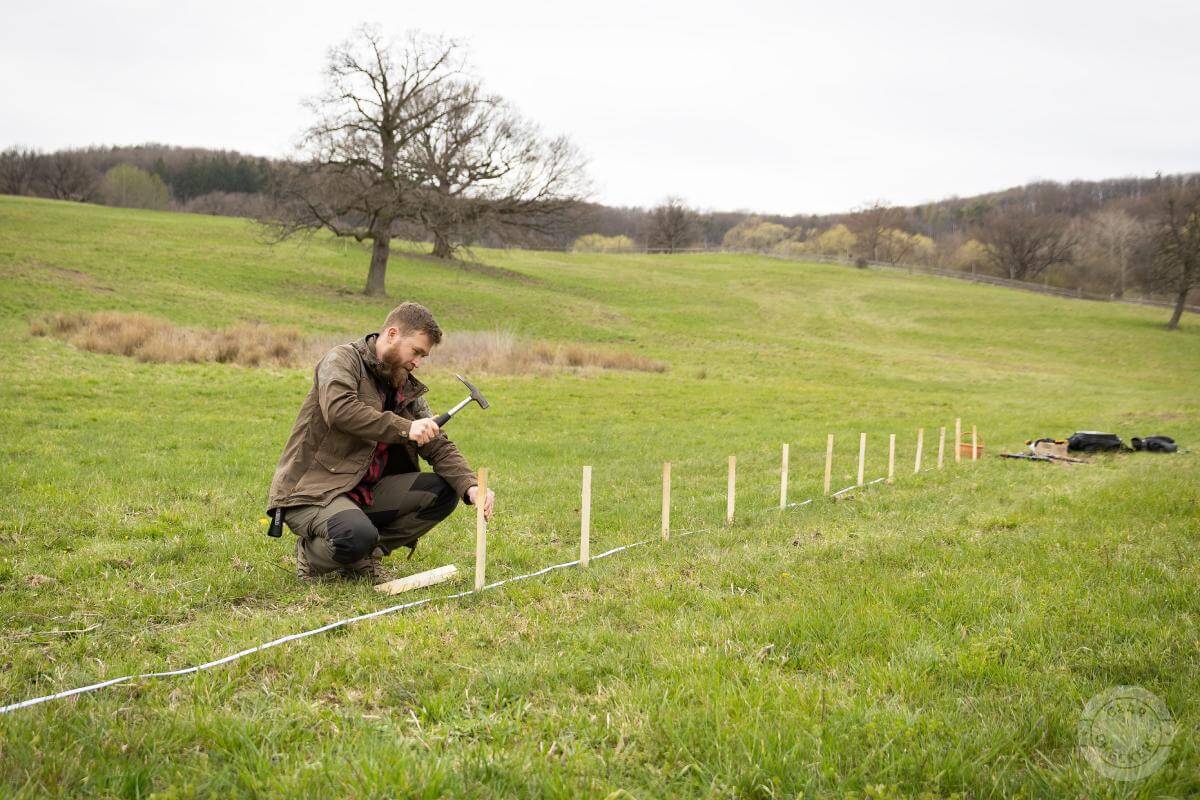
We recorded the test with 5 cameras at once. Two cameras filmed from the side. The first covered the entire 15-meter test area, letting us analyze how the entire cloud behaved while the spray discharged. The second side camera covered roughly the first 7 meters, giving us a more detailed view of how the active agent behaved immediately after leaving the nozzle. A third camera was placed at a safe distance directly downrange, facing the direction of the spray, so we could see from a head-on view how large a cloud of active agent each spray created. The fourth camera was mounted on the tripod we sprayed from. It let us evaluate the stream each spray produced and how clearly it could be seen from the point of view of the person using it. The last camera was a drone hovering about 20 meters above the test site. The direct top-down view helped us judge the width of each spray’s cone of active agent and how the wind affected it.
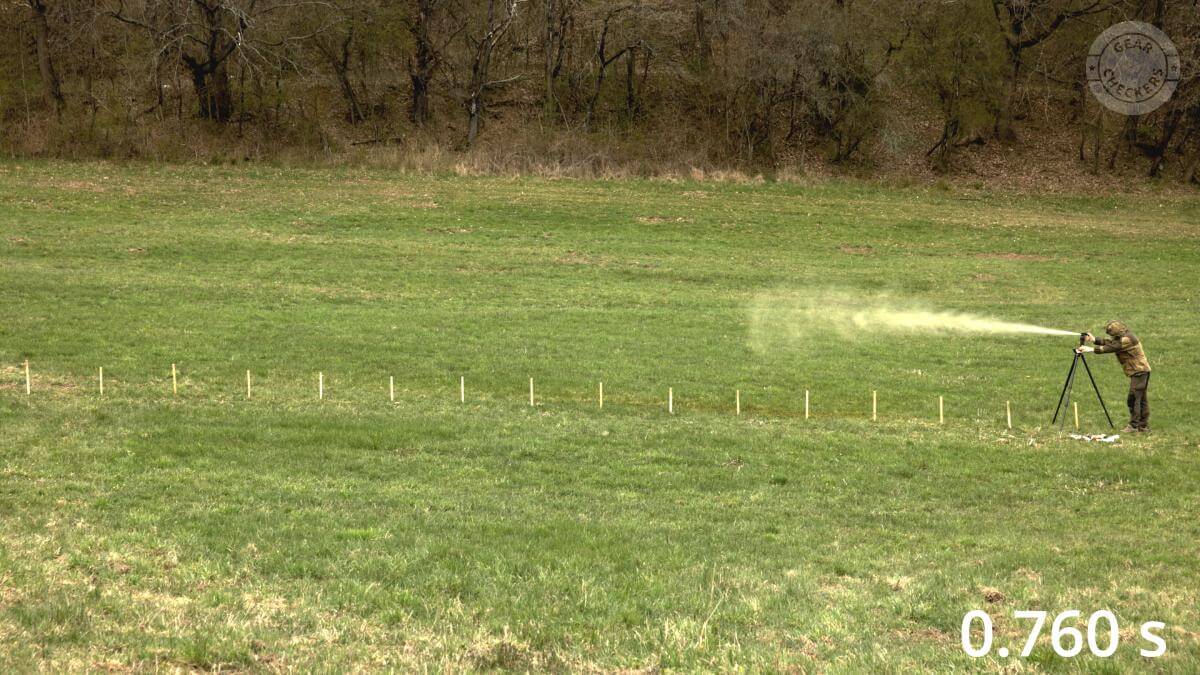
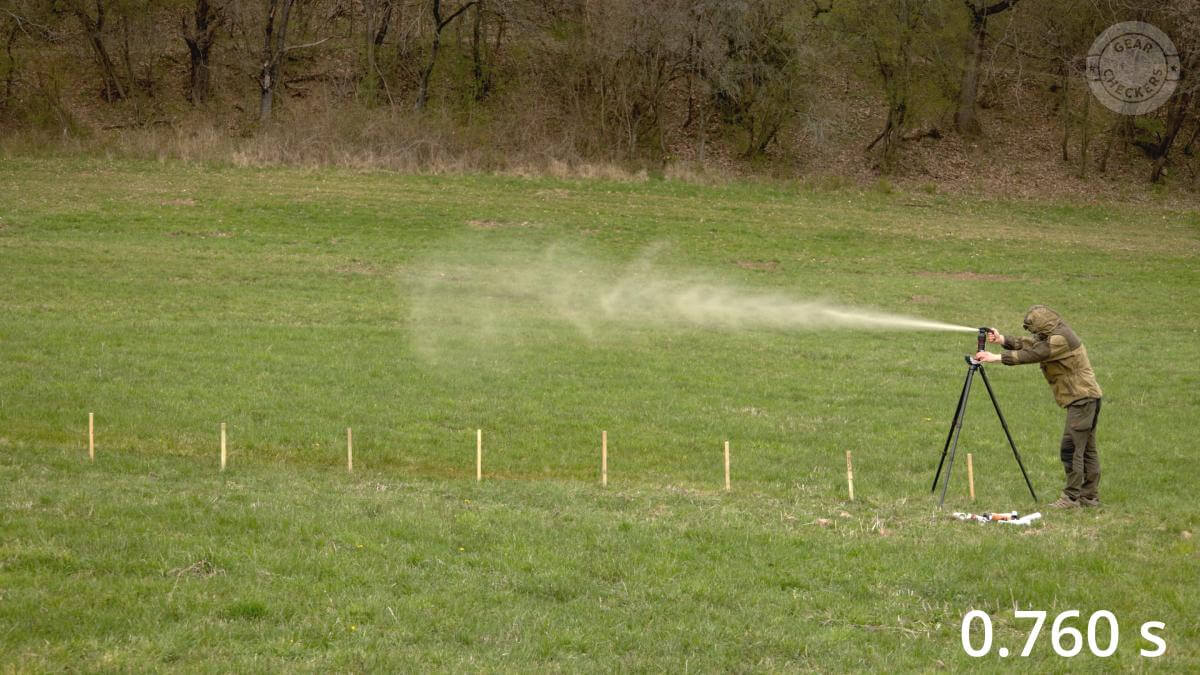
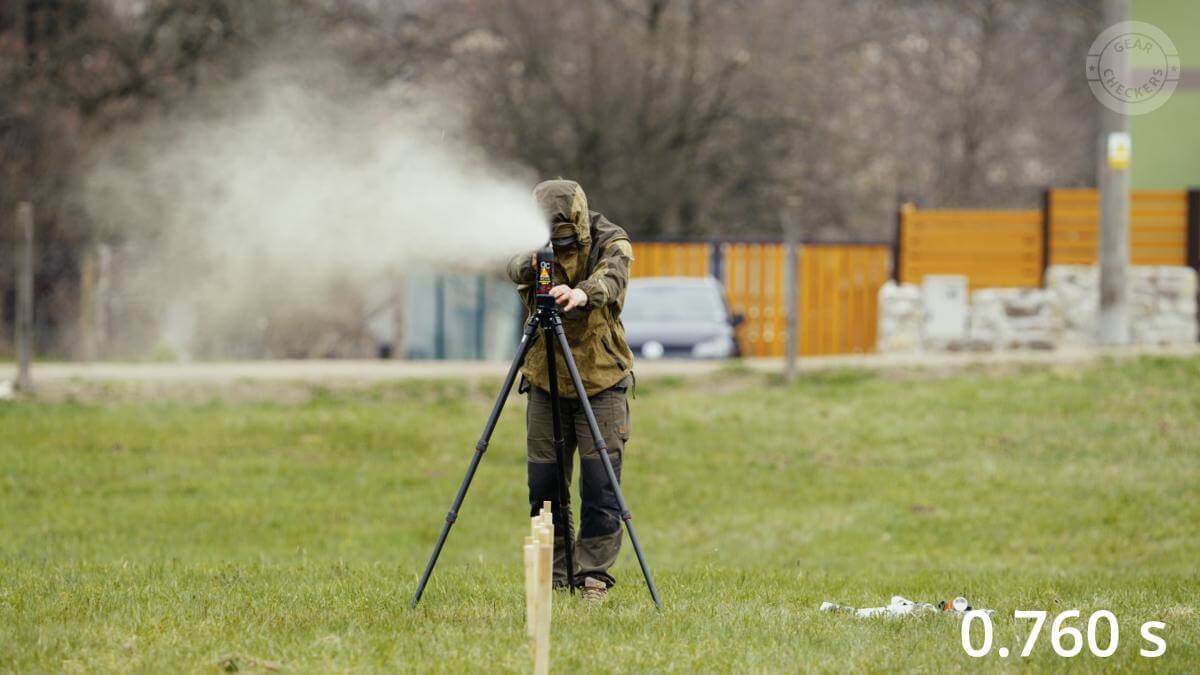
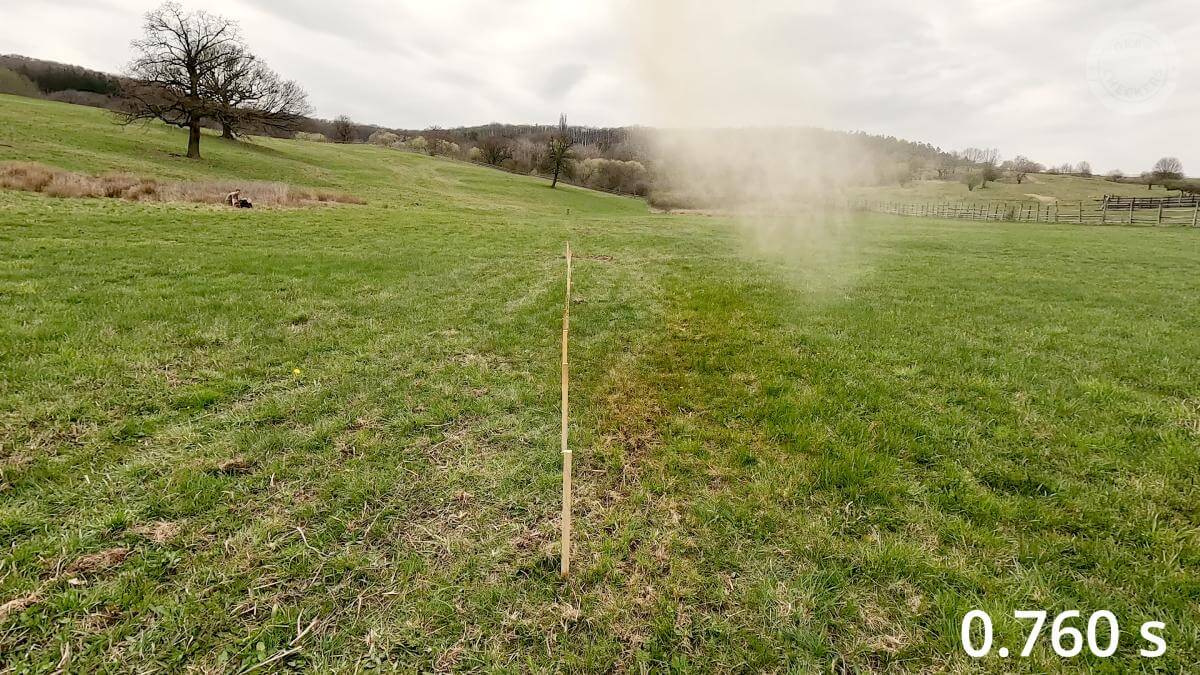
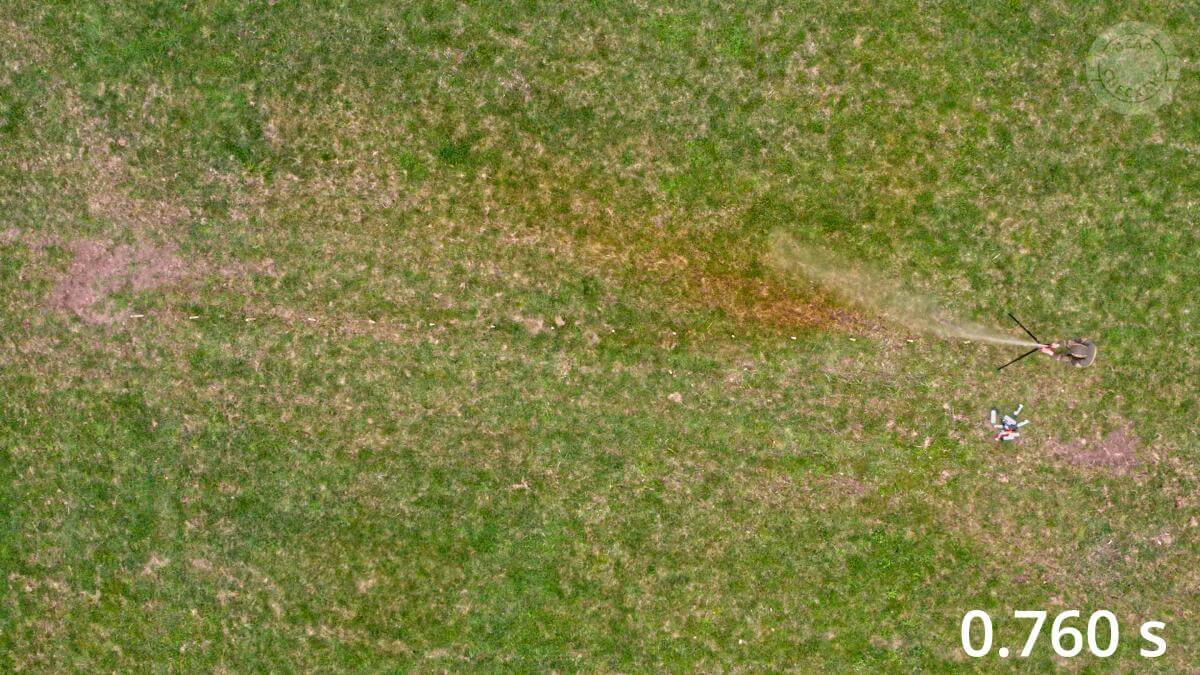
All 5 cameras were synchronized, so we could watch the same moment from different angles.
All cameras recorded in 4K resolution. In post-production, we synchronized the footage. By zooming in and slowing it down, we could study how each spray performed in detail.
Before use, we gave every bear spray a light shake to simulate normal carrying conditions. We then released the safety and discharged the entire contents in one go with one firm press of the trigger.
Weather conditions were not constant during the test, so we do not present the measured results, especially maximum range, as laboratory values. Treat them as indicative numbers and a demonstration of how individual bear sprays perform in real-world conditions.
What we rated on each bear spray
For each bear spray, we rated these parameters:
- Effective spray duration
- Spray range
- Size of the active-agent cloud
- Discharge velocity of the active agent
- Ergonomics
How long a bear spray keeps spraying
At first glance, most bear sprays look like they should spray for a long time. Similarly sized deodorants or hairsprays last for weeks of daily use. That impression is misleading. Even the biggest bear sprays keep spraying for only a few seconds. The active agent is held in the canister under high pressure, so it travels fast and far. But the canister also empties quickly.
Why spray duration matters
A bear attack is a highly stressful situation. If you have ever been through anything similar, you know how hard it is to keep a completely cool head. There is a real chance that you will not use the spray entirely correctly during an attack. If you panic and start spraying at an approaching bear too early, the canister can run empty before you manage to hit the bear with a full dose of the active agent. That is why the time a spray continues discharging enough active agent is one of the main parameters that determine its effectiveness. The longer a spray can keep spraying, the better your chance of hitting the bear and stopping its attack.
Unit of measurement: seconds (s)
Weight in the overall rating: 30%
Bear spray range
The range of a bear spray determines its effective reach, making it one of the most important parameters. To limit the effect of wind on our measurements, we used the distance the cloud of active agent reached during the 2nd second of discharge. We also chose this value because what matters is how far the spray reaches immediately after you press the trigger.
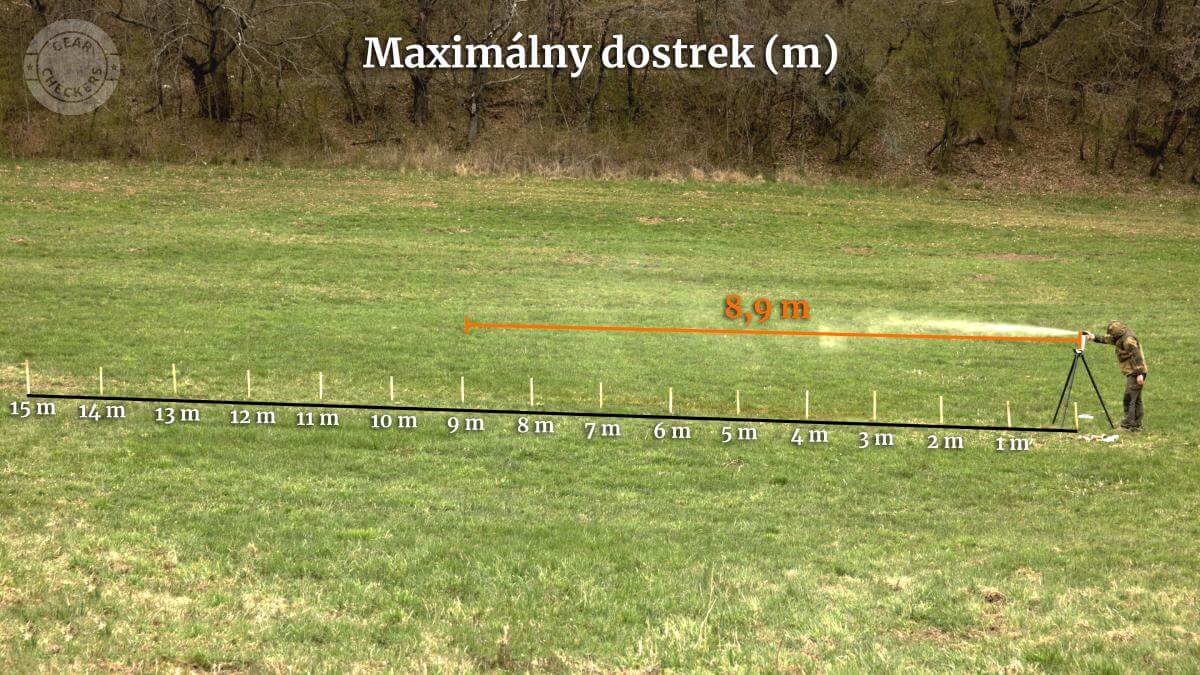
Why range matters
The farther a bear spray reaches, the better. It keeps the bear farther from your body. That gives you more time for a more accurate hit and helps you avoid a face-to-face encounter at point-blank distance.
Unit of measurement: meters (m)
Weight in the overall rating: 25%
Size of the spray cloud
We rated the size of the active-agent cloud by measuring the diameter of the circle the aerosol formed during the 1st second of discharge. From that diameter, we calculated the area of the circle. Put simply, this metric describes how large a defensive shield the spray creates between you and the bear.
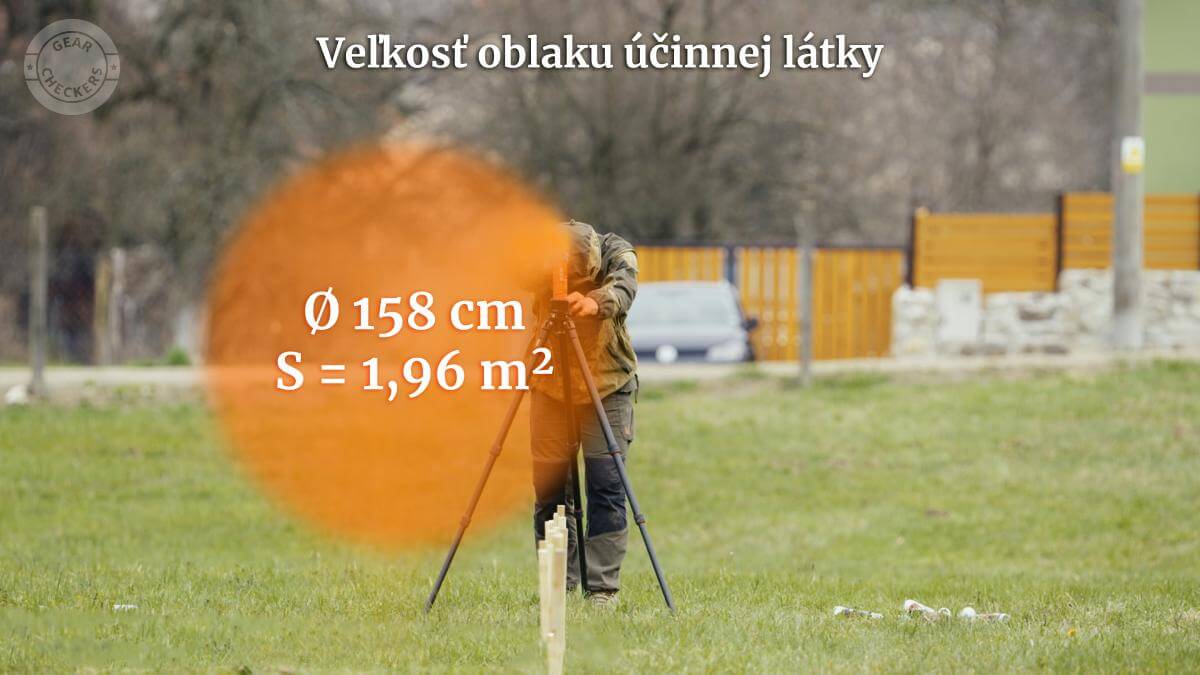
Why the size of the cloud matters
As we said at the start, a bear attack is a stressful situation. The size of the aerosol cloud therefore matters too. Under stress, you may not aim perfectly, and a larger cloud gives you a better chance of hitting the bear.
Units of measurement: circle diameter in centimeters (cm), area in square meters (m²)
Weight in the overall rating: 20%
Discharge velocity
We measured the discharge velocity of the active agent at the point the aerosol cloud reached during the 1st second of discharge, expressed in meters per second. The agent is fastest immediately after leaving the nozzle and then slows down because of air resistance. Some sprays list a muzzle velocity of more than 100 km/h, roughly 4 to 5 times what we measured, precisely because of that gradual slowdown. By measuring the first second of flight, we tried to get a more accurate picture of how quickly the defensive cloud reaches a charging bear.
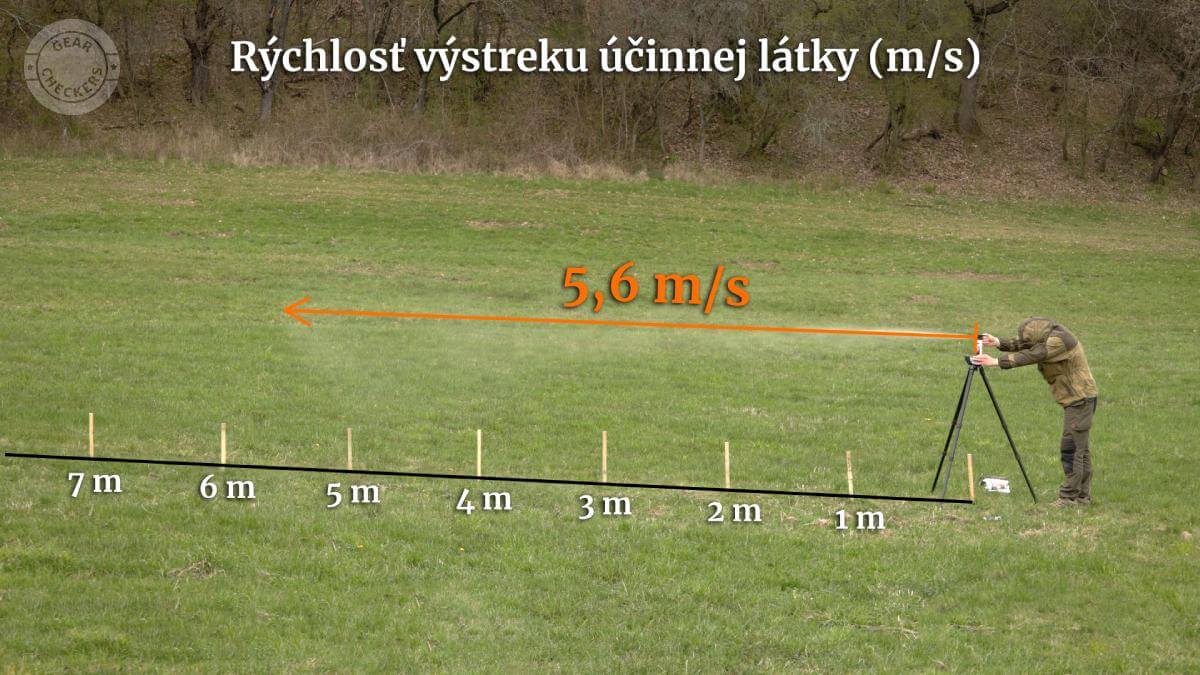
Why discharge velocity matters
The velocity of the aerosol matters for several reasons:
First, the cloud gains kinetic energy from the speed at which it leaves the nozzle. The higher that speed, the greater the kinetic energy of the active agent and the less it is affected by gusts of wind.
Second, the active agent needs to reach the required effective distance in the shortest possible time. The faster the aerosol cloud travels, the sooner the agent reaches the distance where it is needed.
Unit of measurement: meters per second (m/s)
Weight in the overall rating: 10%
Ergonomics
Finally, we rated how practical each spray is to carry and use. This does not affect the physical properties or effectiveness of a bear spray, but we still consider it important in practice for several reasons.
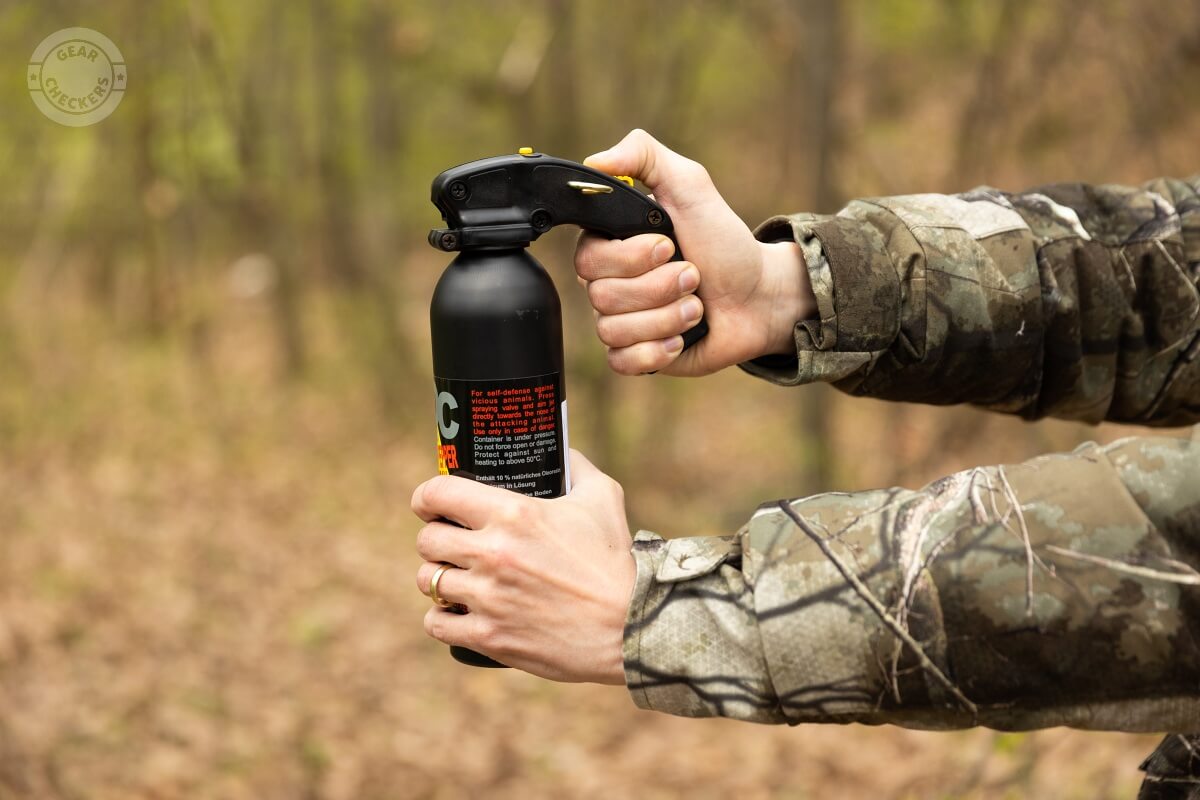
Why overall ergonomics matter
Even the best bear spray is useless if it is not within immediate reach when you need it. We therefore checked whether a holster was available for carrying each spray properly. We also rated the overall size of the canister relative to its volume. Some sprays are quite bulky for the amount they hold, making them less practical to carry because they simply get in the way.
We also rated the design of the grip and safety clip for carrying: whether the spray tends to snag on gear or branches, and whether the safety can release accidentally. Both also matter when you need to use the spray, so we assessed how the safety releases and whether the spray can be safely re-secured afterward.
We also rated how clearly the active agent is visible in flight. Under the stress of a bear attack, you may miss the charging animal if you cannot see where you are spraying, and the spray will not work. We also gave credit for small extras, such as a glow-in-the-dark safety clip that makes releasing it easier at dusk and in the dark.
Unit of measurement: percent (%)
Weight in the overall rating: 15%
Why our measurements differ from manufacturer claims
Most sprays advertise a range of around 10 meters, sometimes more. The fact that no spray reached that far in our test does not necessarily mean the manufacturers are lying. If we sprayed indoors and measured where individual particles eventually landed after a long time, we believe many would clear the 10-meter mark.
The same applies to some other values. If a spray is still hissing and pushing out the last remnants of its contents, you could argue that it is still spraying and therefore lasted much longer. We doubt those last remnants would repel a bear attack. We therefore stopped the clock when the nozzle stopped discharging a sufficient amount of active agent.
Throughout the test, we designed the measurements and parameters to reflect real-world use as closely as possible. We do not claim to have conducted a laboratory test, and we treat the measured values as indicative. Their purpose is to let you compare the sprays with one another.
What did not make it into our rating
You may have noticed that we did not discuss the content of active compounds, especially capsaicin. Obtaining exact values requires an expensive laboratory analysis. Since we would otherwise have to rely entirely on manufacturer and retailer claims, we chose to leave this parameter out of the test. They have a strong marketing incentive, and claims on paper are easy to make.
Sprays also use different types of active agents. The main ones are OC (oleoresin capsicum), CR (dibenzoxazepine), CS (o-chlorobenzylidene malononitrile) and CP (8-methyl-N-vanillyl-trans-6-nonenamide, capsaicin). Their potency differs. CR, for example, has a far stronger effect than OC; the difference can be severalfold.
Internationally, potency is commonly expressed in % MC (major capsaicinoids), a combined metric for all the main capsaicinoids. The USA even has standards capping the maximum concentration of active compounds expressed in % MC: for bear sprays, it must not exceed 2%. That concentration was found to be more than enough to stop a bear attack while remaining not too dangerous if accidentally discharged at a person, meaning it causes no permanent harm.
Spray potency is also sometimes listed in Scoville Heat Units (SHU).
Because this topic goes beyond our knowledge of chemistry, we decided not to score it as a parameter for now. We know we could create more confusion than clarity. At the same time, we have started working with a chemistry expert to better understand how the individual components of these pepper mixtures work in bear sprays. We will cover it in a separate article, and in time we will try to expand this test by rating the composition of each spray.
From our own experience, however, we can confirm that a 2% content of major capsaicinoids (MC), which is what SABRE uses in its defensive bear sprays, is enough to stop a bear attack.
Best bear spray: test results
For stopping a bear attack, the suitable choices are the larger sprays of 272 to 400 ml, which keep discharging the active agent long enough (6.8 to 7.6 s) and have sufficient range (6.1 to 8.3 m). The measured differences may look negligible, but every second can determine the outcome of a bear attack, so do not underestimate your choice of bear spray.
Defense sprays against smaller animals
The results make one thing clear: bear sprays of 150 to 200 ml have a fairly short spray duration (3.5 to 5.3 s), making them unsuitable for stopping a bear attack. They are better suited for defense against a dog or a human attacker.
Gel vs. aerosol bear spray
The test also included bear sprays with a gel formula: MACO STOP Extreme GEL 150 ml and MACO STOP Extreme GEL 300 ml. The seller claims the gel consistency resists wind and keeps the trajectory of the active agent stable. As our test showed, the gel bear spray was also affected by wind, though somewhat less than the aerosol sprays. However, a gel bear spray has a much narrower spread of active agent, so using it requires a very precise hit, which may not be possible under the stress of an attack.
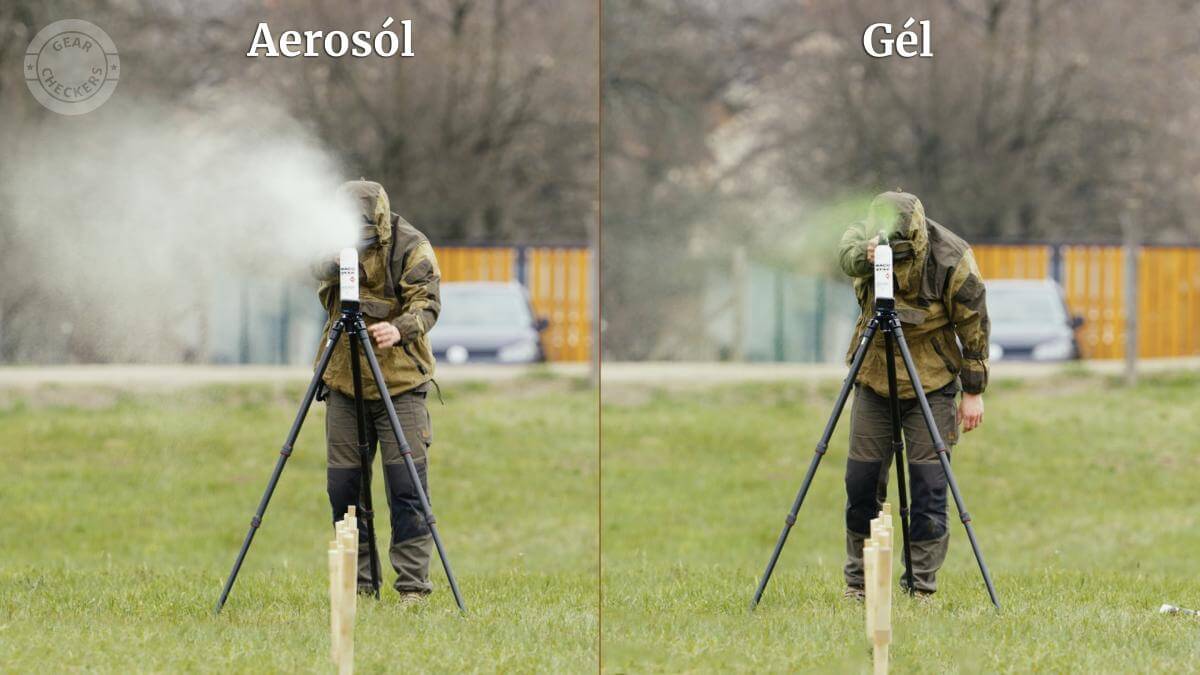
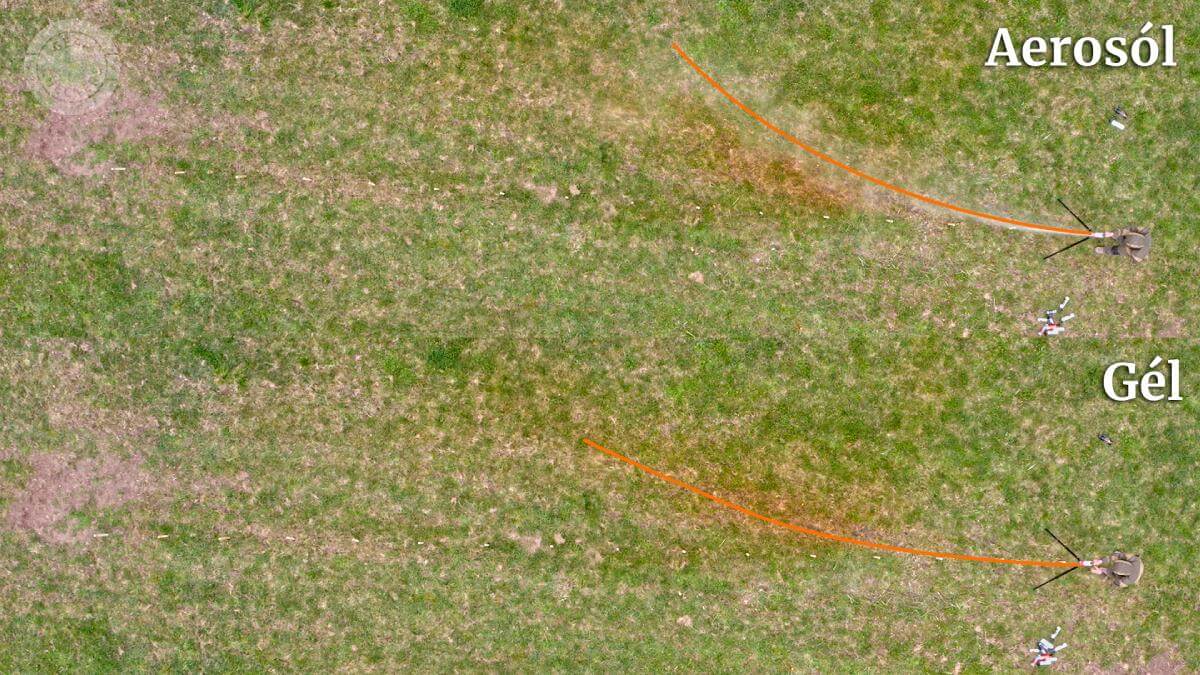
We therefore see gel sprays as a specific type of defense spray for less common situations: strong wind, an experienced user who will not panic during a bear attack (if such a person exists), or repelling an attacker indoors, where an aerosol spray would also affect other people. If we were sending our parents into the woods to pick mushrooms with one of these sprays, we would definitely recommend an aerosol rather than a gel spray.
Which bear spray we personally recommend
In areas with a higher bear population, we personally carry SABRE FRONTIERSMAN, and it is the one we recommend to you as well. Why this bear spray?
- It helped us stop the charge of a mother bear leading her cubs (personal experience).
- SABRE has a long history and extensive experience in making defense sprays.
- The spray is designed and made in the USA, a country with extensive experience with bears.
- It has excellent range, spray duration and concentration of active compounds.
- The orange dye makes the aerosol cloud clearly visible during use.
- The safety clip glows in the dark, so you can find the spray even at night.
- The canister is compact for its volume.
- A carrying holster is available for it.
- The ergonomics are excellent.
General recommendations call for a spray with at least 225 g of contents, 1 to 2% capsaicin (% MC), and a range of at least 7.5 m sustained for 6 seconds to stop a bear attack. Several sprays of around 300 to 400 ml that we tested meet these parameters (see our test results for details) and should work well in a bear attack.
If we had to pick one bear spray today, we would still take the SABRE Frontiersman.
It is not the cheapest spray in the test. We recommend it because it combines strong measured results, practical carrying, and our own live encounter in the field. Since a spray works only when it is within reach, we carry it in a belt holster.
Where to buy bear spray
Where you can buy bear spray depends on where you live. In North America, SABRE bear sprays are widely available from outdoor retailers. In Central Europe, bear spray is sold mainly by hunting and outdoor shops. We sell the tested winner, including sets with a belt holster, in our own shop: TENTAUR.sk (site in Slovak, ships to Slovakia, the Czech Republic and Poland). It is our own store, and every purchase supports more hands-on tests like this one.